
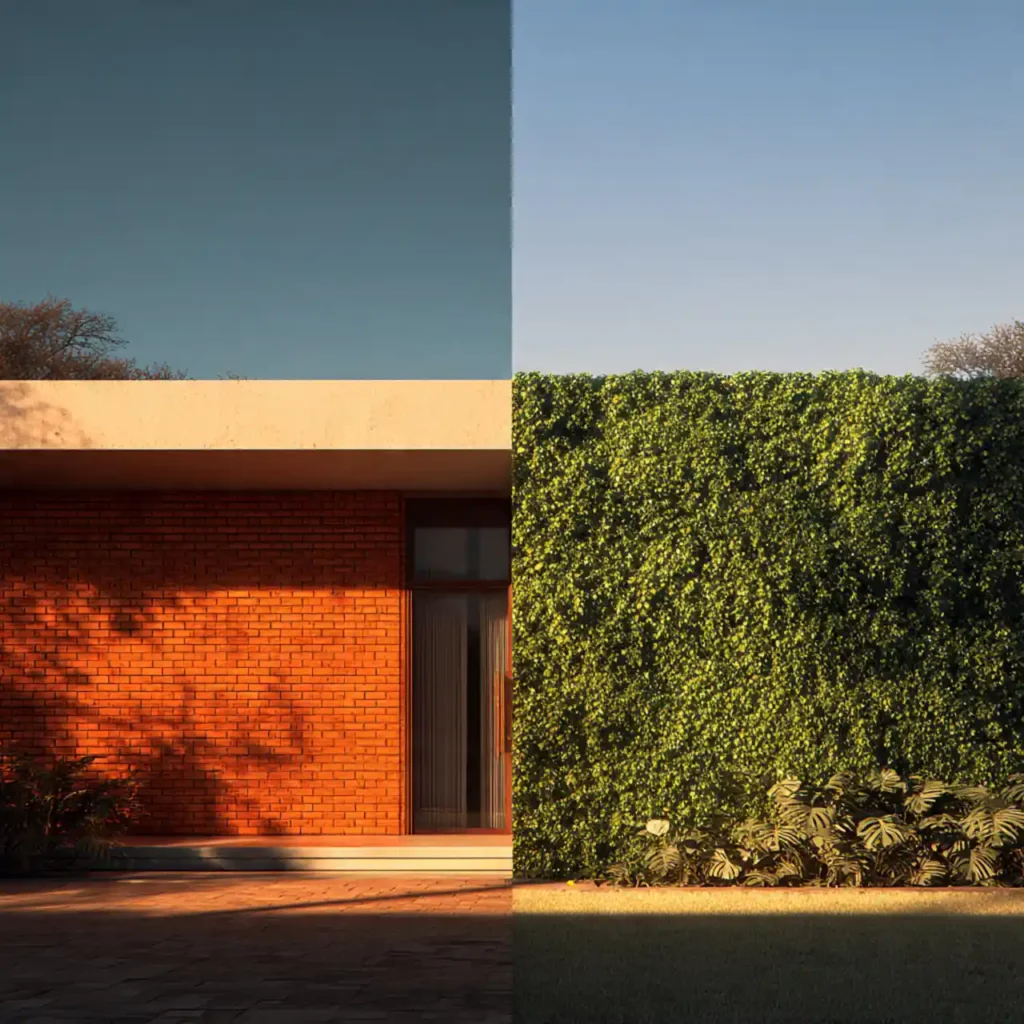
The Impact of Green Walls on Property Value in Zimbabwe’s Growing Property Market
Zimbabwe’s summers push temperatures well above 35°C in many urban centres. In Bulawayo, concrete buildings absorb that heat all day and release it slowly through the night, raising indoor temperatures and driving up energy costs. Green walls — also called living walls or vertical gardens — offer a science-backed solution. At Tusker Civils & Landscapes, we design and install green walls in Bulawayo that cool buildings naturally, reduce energy consumption, and transform plain walls into striking living features.
What Exactly Is a Living Wall?
A living wall is a vertical structure covered entirely or partially in rooted, growing plants. Unlike a climbing vine on a trellis, a true green wall incorporates a modular panel system, a growing medium, and an integrated irrigation network — all mounted directly to an external or internal wall surface. The plants grow perpendicular to the ground, forming a continuous curtain of vegetation that works as both insulation and a cooling engine.
Two Main Types of Green Walls
Green walls generally fall into two categories: green facades and living wall systems. A green facade uses climbing plants rooted at ground level, trained upward along a support structure. A living wall system, by contrast, holds plants in panels fixed to the wall face, allowing a much denser variety of species at every height. For Zimbabwean buildings where space is tight and visual impact matters, living wall systems deliver the best results. Our team at Tusker Civils & Landscapes installs both types, depending on the structural requirements and budget of each project.
The Science: How Green Walls Reduce Heat
Evapotranspiration Cools the Air
The primary cooling mechanism in a living wall is evapotranspiration — the combined process of water evaporating from the growing medium and transpiring through plant leaves. As water moves through the plant and escapes into the air as vapour, it absorbs heat energy from the surrounding environment. Studies consistently show that a well-maintained living wall can reduce the surface temperature of the wall behind it by 10°C to 20°C compared to an exposed concrete or brick surface. In Bulawayo’s hot, dry summers, that reduction makes an immediate, measurable difference to indoor comfort.
Shading Blocks Direct Solar Gain
A dense green wall intercepts direct sunlight before it strikes the building surface. Concrete and brick absorb solar radiation and convert it to heat — a phenomenon called the urban heat island effect. The plant canopy of a green wall reflects a portion of that solar energy and absorbs the rest through photosynthesis rather than heat generation. As a result, walls fitted with living panels stay significantly cooler than bare masonry throughout the day. This shading effect is particularly valuable on west-facing walls in Bulawayo, which receive the most intense afternoon sun.
Insulation Reduces Heat Transfer
Beyond cooling, green walls add a layer of thermal insulation. The growing medium, the air pockets between plant layers, and the moisture content of the root zone all slow the movement of heat through the wall. During winter, this insulation effect keeps warmth inside the building. During summer, it prevents external heat from penetrating inward. The result is a more stable internal temperature year-round — reducing reliance on air conditioning and, consequently, cutting energy bills.
Air Quality Improves as a Secondary Benefit
While heat reduction remains the primary driver, living walls also filter airborne particulates and volatile organic compounds from the surrounding air. In dense commercial areas of Bulawayo where vehicle traffic and construction dust are common, this air-scrubbing function adds measurable value to the indoor environment. Research into urban green infrastructure confirms that living walls contribute to improved biodiversity, pollution absorption, and surface water management — benefits that extend well beyond aesthetics.
Why Green Walls Make Sense for Zimbabwean Properties Specifically
Zimbabwe’s Climate Demands Passive Cooling Solutions
Zimbabwe’s subtropical climate means long, hot summers with intense solar radiation. Most commercial buildings in Bulawayo rely heavily on mechanical air conditioning — an expensive, energy-intensive solution that places significant demand on the national electricity grid. Green walls offer a passive alternative. Once installed and established, they cool buildings without motors, refrigerant, or power consumption. For businesses operating in Bulawayo, that translates directly into lower monthly energy costs and reduced exposure to load-shedding disruptions.
Water Efficiency Matters in Dry Conditions
A common concern in Zimbabwe is water availability, particularly during dry seasons. Modern green wall systems address this through closed-loop drip irrigation that delivers water directly to root zones with minimal waste. Tusker’s irrigation systems integrate seamlessly with living wall installations, ensuring plants receive precisely the right amount of water at the right time. Combined with drought-tolerant plant species selected for local conditions, a properly designed system uses far less water than a conventional ground-level garden of equivalent coverage.
Green Walls Complement Broader Landscaping Projects
Many property owners in Bulawayo install green walls as part of a larger outdoor transformation. A living wall pairs naturally with instant lawns for the surrounding garden, artificial grass for low-maintenance zones, and quality paving for driveways and pathways. Together, these elements create a cohesive outdoor space that looks outstanding, performs well in Zimbabwe’s climate, and adds long-term value to the property.
Choosing the Right Plants for a Bulawayo Green Wall
Not every plant species suits Zimbabwe’s climate. Successful green walls in Bulawayo rely on species that tolerate heat, manage with intermittent moisture, and maintain density through both the wet and dry seasons. Suitable choices include pothos, philodendrons, peace lilies for interior walls, and a range of succulents, ferns, and ornamental grasses for exterior installations. International guidance on living wall plant selection highlights the importance of matching species to the specific microclimate of each wall — aspect, wind exposure, and available light all influence which plants will thrive.
Tusker’s landscaping team carries out a full site assessment before recommending a plant palette. This ensures that every green wall installation performs reliably through Zimbabwe’s seasons rather than deteriorating after the first dry spell.
How Tusker Civils & Landscapes Designs and Installs Green Walls
From initial consultation through to final handover, Tusker manages the full green wall process. Our team assesses the structural integrity of the host wall, specifies the appropriate panel system and growing medium, designs the integrated irrigation layout, and selects plant species suited to the building’s aspect and usage. Installation typically takes between one and three days for a standard residential or commercial wall. After installation, we provide maintenance guidance and, where required, ongoing care schedules.
We work across Bulawayo’s key residential and commercial suburbs, including Famona, Khumalo, Hillside, Burnside, and surrounding areas. Whether you manage a commercial property, run a hotel or restaurant, or want to transform the boundary wall of your home, Tusker delivers a green wall built to last in Zimbabwe’s conditions.
Get a Green Wall Quote in Bulawayo Today
Ready to reduce heat, cut energy costs, and give your building a striking living facade? Contact Tusker Civils & Landscapes today for a free consultation and site assessment.
Recent Posts:
How Green Walls Increase Property Value in Bulawayo’s Growing Real Estate Market
Indoor vs Outdoor Green Walls — Which Is Right for Your Bulawayo Property?
Why Developers and Estate Agents in Bulawayo Are Using Instant Lawn Before Selling
The Cost of Instant Lawn Installation in Bulawayo— What’s Included and What’s Not