
Waterproofing Bulawayo
Professional Waterproofing Contractors
Tusker Civils & Landscapes are specialist waterproofing contractors in Bulawayo. We serve residential, commercial, and industrial properties across the city. Our teams waterproof concrete roofs, insulated boarded roofs, IBR and corrugated roofs, tiled roofs, gutters, and retaining walls. We also cover parapet walls, basements, water features, balconies, patios, face-brick surfaces, bathrooms, and trafficable surfaces including car parks. On average, we install over 20,000 square metres of approved waterproofing products every month. All installations carry written guarantees ranging from five to fifteen years, depending on the system your property requires. Whatever needs waterproofing — we get it done on budget and on time.
Our Waterproofing Services in Bulawayo
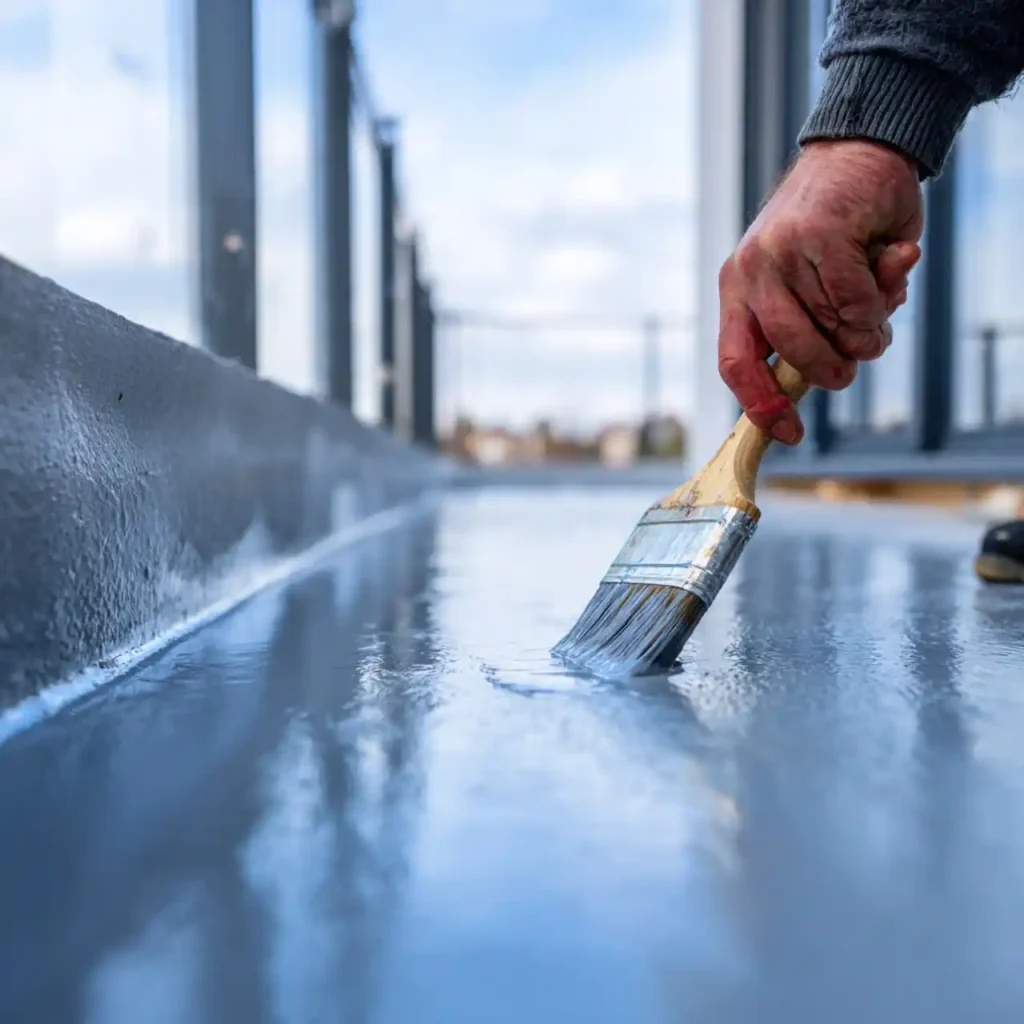
Balcony Waterproofing
Balconies and podium decks present technically demanding waterproofing challenges. They must handle foot traffic, furniture loading, and thermal movement while staying completely watertight. Tusker Civils & Landscapes installs high-performance liquid-applied polyurethane membranes and trafficable waterproofing systems to balcony slabs across Bulawayo. Our systems work beneath tiled, paved, or exposed finishes. They protect the structural slab from water damage for years to come.
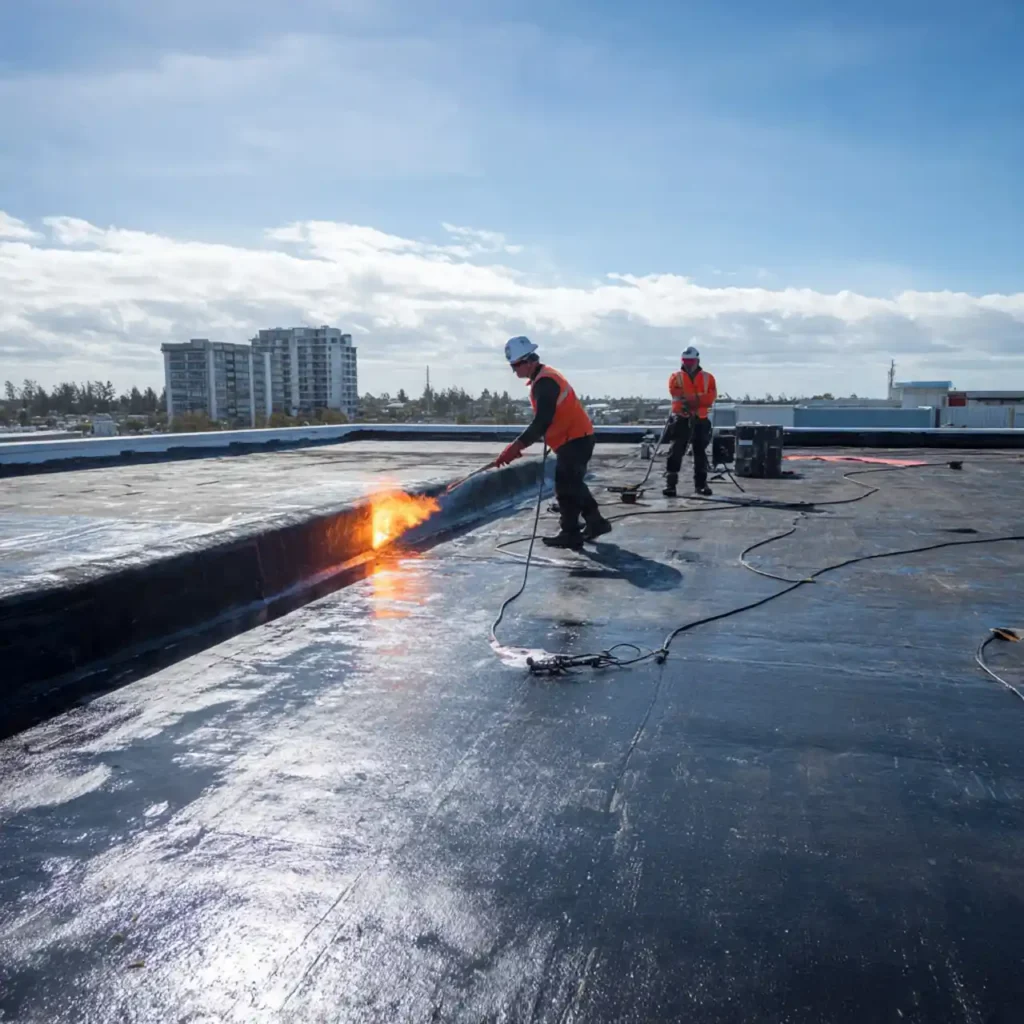
Roof Waterproofing
Flat and low-pitch roofs are among the most vulnerable areas on any Bulawayo property. Without a properly specified membrane, seasonal rainfall enters the building envelope. It then causes extensive damage to ceilings, walls, and structural elements. Tusker installs torch-on bitumen membranes, liquid-applied polyurethane systems, and acrylic coatings to flat concrete roofs, insulated boarded roofs, IBR roofs, corrugated sheeting, and tiled surfaces. Our teams also carry out full surface preparation — including crack repair, priming, and levelling — before membrane application. This ensures full adhesion and long-term performance.
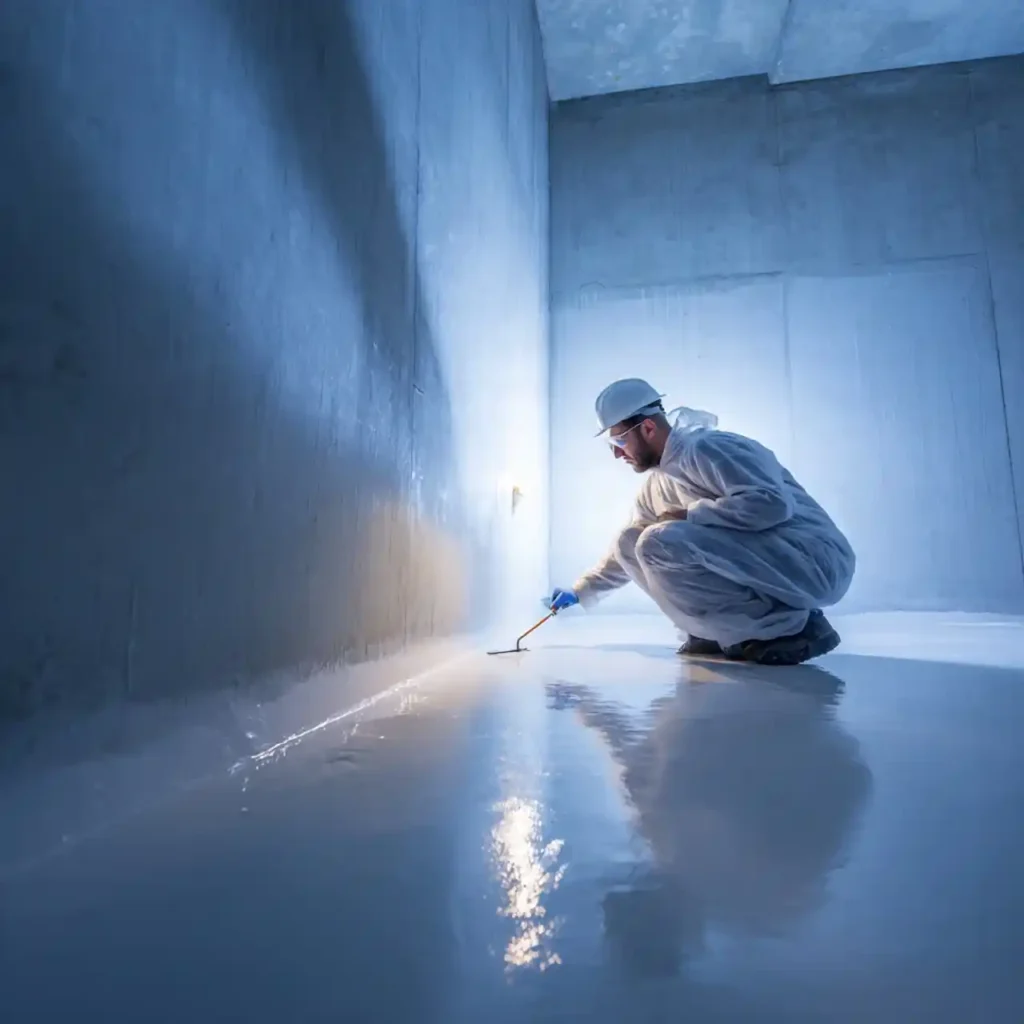
Basement Waterproofing
Basement waterproofing in Bulawayo requires careful specification. This is particularly important during the summer rainy season, when water tables rise and hydrostatic ground pressure increases. Tusker Civils & Landscapes applies cementitious waterproofing, crystalline treatments, and drainage cavity systems to basement slabs, retaining walls, and below-ground structures. Our teams assess the groundwater conditions and structural configuration of each project before specifying the appropriate system. As a result, below-ground spaces remain dry and usable year-round. You can also read more about our concrete structure protection on our civil construction page.
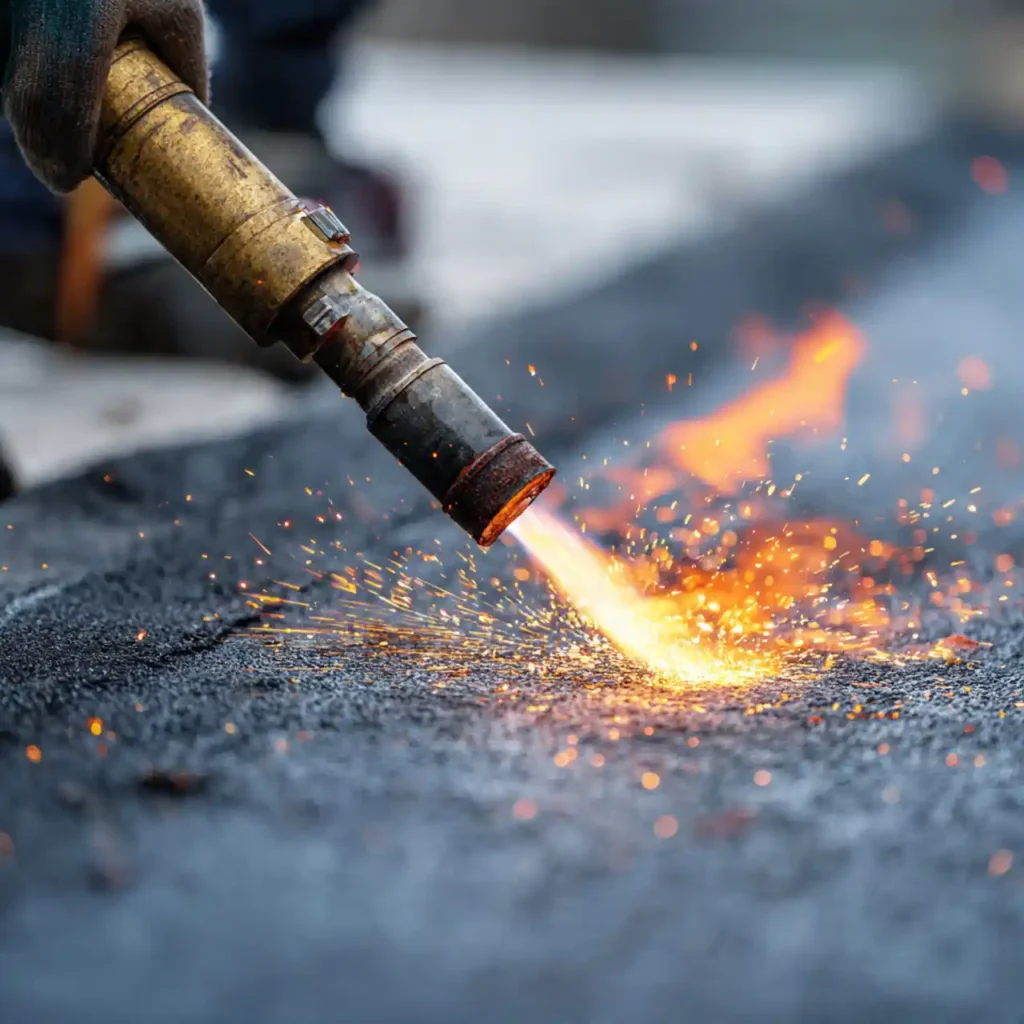
Torch-On Waterproofing
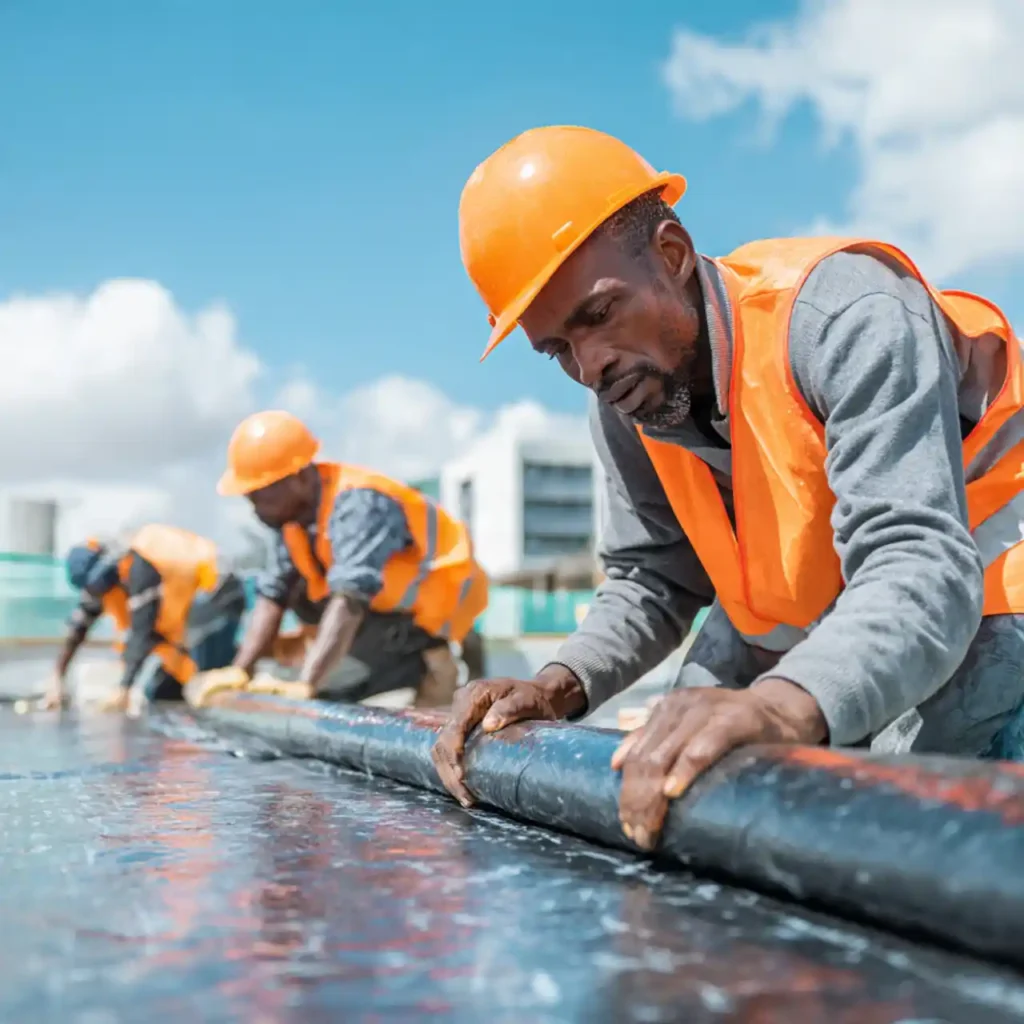
Torch-on waterproofing is one of the most durable systems for flat roofs in Zimbabwe. Our teams heat-fuse a modified bitumen membrane directly onto the prepared substrate using a gas torch. This creates a seamless, fully bonded waterproof layer. It resists hydrostatic pressure, UV radiation, and thermal movement. Tusker applies both APP and SBS formulations. APP membranes perform well in Bulawayo’s high UV environment. SBS membranes suit roofs subject to structural movement or thermal cycling. We select the most appropriate formulation based on your roof’s exposure and expected service life.
Damp Proofing
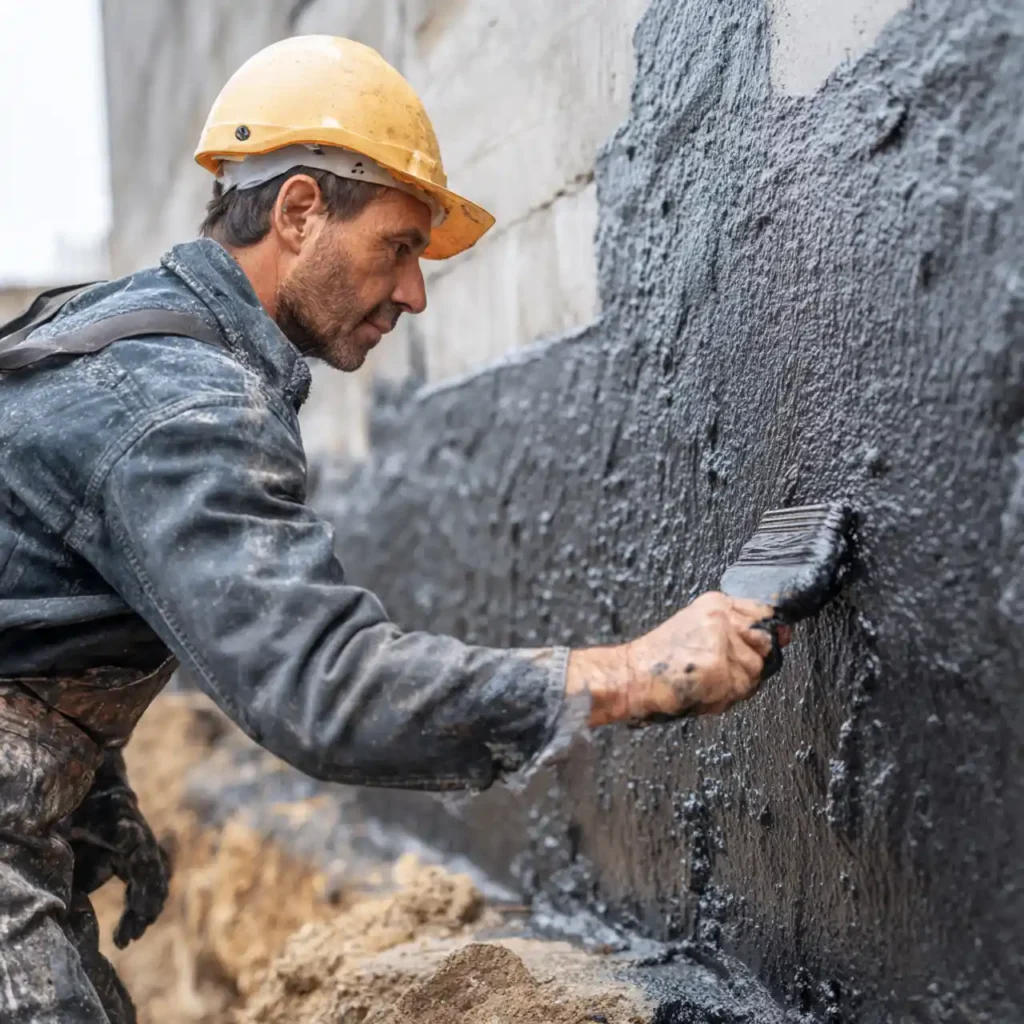
Rising damp moves through below-ground and ground-floor walls as moisture vapour. Over time, it damages interior plaster, paint finishes, and flooring. Tusker Civils & Landscapes applies bitumen emulsion, crystalline, and cementitious damp proofing treatments to external and internal wall surfaces across Bulawayo. Our teams assess your specific situation first. We then recommend the correct treatment — whether a surface damp proof course, an injection system, or a more comprehensive waterproofing solution — to ensure lasting results.
Green Roof Waterproofing
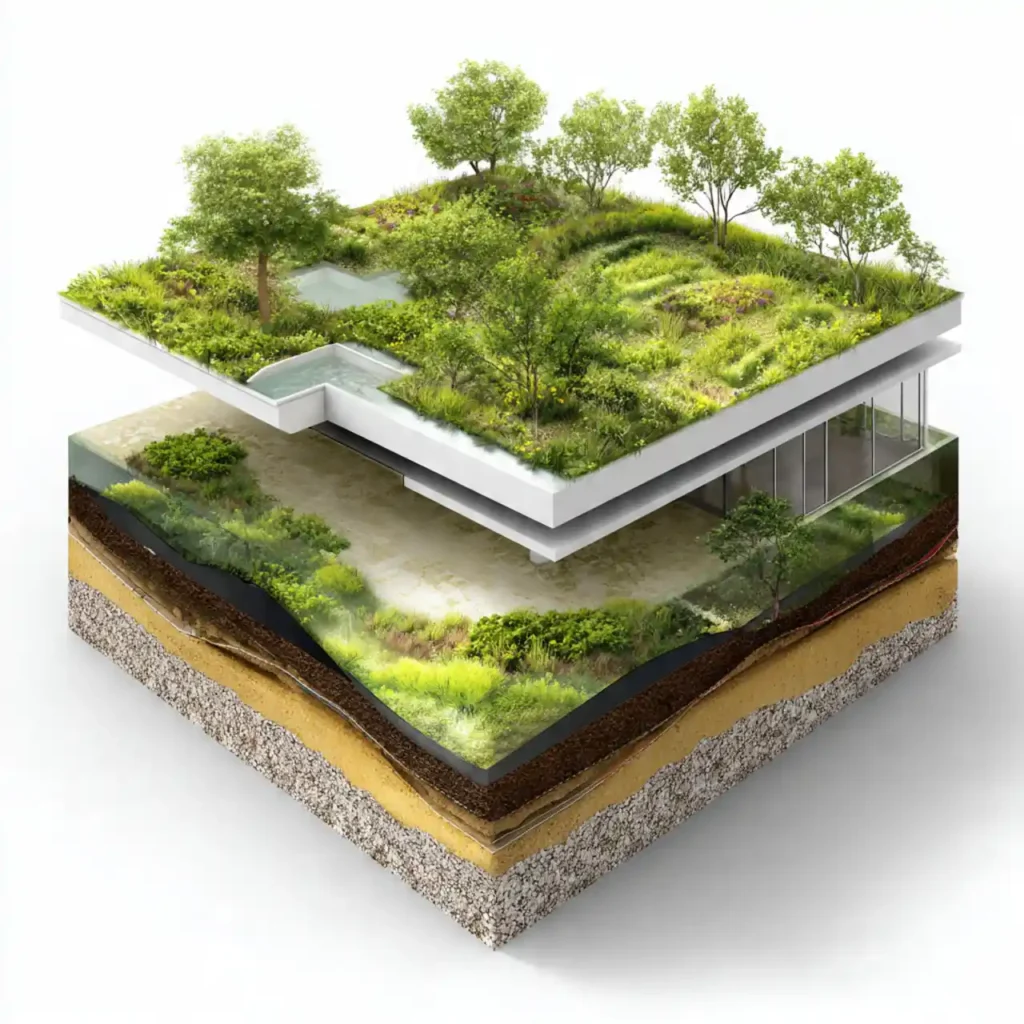
Green roofs need a robust, root-resistant waterproofing system beneath the growing medium. Without it, plant roots penetrate and damage the structural slab over time. Tusker Civils & Landscapes installs root-barrier membranes and high-performance waterproofing systems as the foundation layer for green roof projects across Bulawayo. This service also works hand in hand with our green walls and vertical garden installations. Together, we deliver complete green infrastructure solutions for residential, commercial, and estate clients.
Why Choose us Waterproofing in Bulawayo?
Free and no-obligation quotations
Tailored waterproofing solutions for every structure
Written workmanship guarantees (5–15 years)
Skilled, experienced waterproofing teams
Complete civil and structural repair services
Competitive, transparent pricing
On-time, on-budget project delivery
Got Questions?
Frequently Asked Questions
1. What waterproofing services does Tusker Civils & Landscapes offer in Bulawayo?
Tusker Civils & Landscapes offers a comprehensive range of professional waterproofing services across Bulawayo and surrounding areas. Our waterproofing solutions include roof waterproofing, balcony waterproofing, basement waterproofing, torch-on waterproofing, crystalline waterproofing, liquid membrane waterproofing, and damp proofing for both residential and commercial properties.
2. How much does waterproofing cost in Bulawayo?
Waterproofing costs in Bulawayo vary depending on the size of the area to be waterproofed, the method of waterproofing required, the condition of the existing surface, and the accessibility of the structure. As a general guide, basic roof waterproofing for a standard residential property starts from USD 8 to USD 15 per square metre, while more complex systems such as torch-on waterproofing or basement waterproofing involving hydrostatic pressure management may range from USD 15 to USD 35 per square metre.
3. What is torch-on waterproofing and is it suitable for my roof in Bulawayo?
Torch-on waterproofing is a high-performance waterproofing system that uses bitumen-modified polymer membranes applied to a surface using a gas torch to heat-fuse the membrane directly onto the substrate, creating a seamless, fully bonded waterproof layer.
4. How do I know if my roof needs waterproofing in Bulawayo?
There are several clear warning signs that your roof waterproofing has failed or is deteriorating and requires professional attention. These include water stains or damp patches appearing on interior ceilings, visible cracks or blistering on the roof surface, peeling paint on interior walls directly below the roofline, musty or mouldy odours in upper-floor rooms, visible pooling of water on flat roof surfaces after rainfall, deteriorating or crumbling parapet walls, and rust stains on ceilings caused by corroding reinforcing steel within the concrete slab above.
5. What is the difference between waterproofing and damp proofing?
Waterproofing and damp proofing are related but distinct treatments that address different levels of moisture exposure. Damp proofing is designed to resist moisture vapour transmission and light surface moisture — it is typically applied to below-ground walls to prevent ground moisture from migrating through the wall surface into interior spaces.
6. What is crystalline waterproofing and when is it used in Bulawayo?
Crystalline waterproofing is a highly specialised waterproofing technology that works by penetrating deep into the pores and capillary tracts of concrete, where it reacts chemically with moisture and cement particles to form insoluble crystalline structures that permanently block the pathways through which water migrates.
7. How long does waterproofing last in Bulawayo and does it come with a guarantee?
The lifespan of a waterproofing system depends on the method used, the quality of materials applied, the standard of surface preparation, and the severity of the environmental conditions the system is exposed to. As a general guide, a professionally applied torch-on bitumen membrane system on a flat roof should last between 10 and 15 years under normal Bulawayo conditions.
8. Can waterproofing be applied during Bulawayo's rainy season?
This is one of the most frequently asked questions we receive from Bulawayo property owners, particularly those dealing with active leaks during the summer rainfall season between November and March. The honest answer is that it depends on the waterproofing system being applied. Most waterproofing systems — including torch-on membranes, liquid-applied coatings, and acrylic systems — require a dry substrate for correct application and adequate curing time before exposure to moisture.