
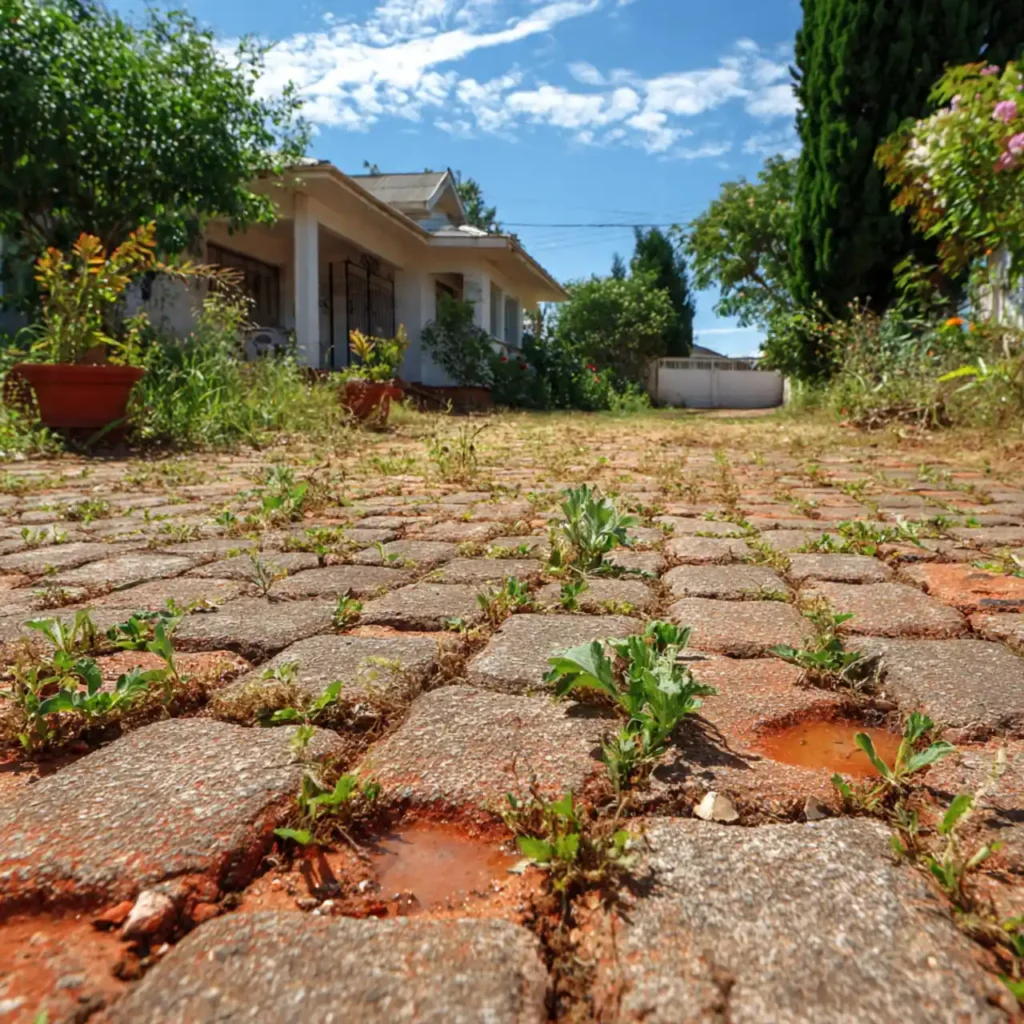
Don’t Make These 7 Paving Mistakes When Upgrading Your Bulawayo Home
Paving a driveway or patio in Bulawayo, Zimbabwe is a significant investment. Done correctly, quality paving lasts for decades, adds serious kerb appeal, and handles everything from heavy vehicle loads to seasonal rain. Done poorly, it cracks, sinks, and costs far more to fix than it would have to do right the first time. At Tusker Civils & Landscapes, our paving teams see the same avoidable mistakes on properties across Bulawayo, year after year. Here are the seven most common ones — and exactly what you should do instead.
1. Skipping Proper Sub-Base Preparation
This is the single biggest mistake Bulawayo homeowners make, and it causes more paving failures than any other factor. Many contractors skip adequate sub-base preparation to cut costs and speed up the job. The result is paving that sinks, shifts, and cracks within months.
Why the Sub-Base Matters So Much
Every paving surface needs a correctly engineered base layer beneath it. This base distributes the load from vehicles and foot traffic evenly across the soil below. Without it, the paving simply transfers pressure unevenly and starts to move. In Bulawayo, where soils can vary significantly between suburbs like Hillside and Famona, proper ground assessment before any laying begins is not optional — it is essential.
Always insist that your contractor excavates to the correct depth, compacts the sub-base material in layers, and achieves the right degree of compaction before a single paver goes down.
2. Choosing the Wrong Paving Material for the Application
Not all paving materials suit all applications. This is a mistake that catches homeowners off-guard, particularly when they choose a material purely on price or appearance without considering its suitability for the job.
Match the Material to the Load
A decorative clay brick may look beautiful on a garden path, but it will not stand up to heavy vehicle traffic on a driveway. Similarly, standard concrete pavers work well for residential driveways but may not provide the structural capacity needed for a commercial hardstanding or fleet yard. Before you choose a material, consider what load the surface will carry, how frequently people will use it, and how much maintenance you are willing to do over time. Your paving contractor should guide this decision based on the specific application rather than what happens to be cheapest or fastest to install.
3. Ignoring Drainage and Slope
Water is the enemy of all paving. Even in a dry climate like Bulawayo’s, Zimbabwe experiences intense summer rain, and any surface that traps water rather than shedding it will deteriorate quickly.
Design Drainage In From the Start
Paving surfaces need a deliberate slope — typically a minimum gradient — that directs water away from structures and toward appropriate drainage points. Many DIY jobs and under-skilled contractors lay paving completely flat, which means water pools on the surface, seeps into the joints, and undermines the sub-base from below. Over time, this causes subsidence, joint failure, and surface cracking.
Good drainage design goes hand-in-hand with good paving. If your property also has irrigation systems or garden water features, make sure your paving contractor is aware of how water moves across your site before laying begins.
4. Using Untreated or Low-Quality Sand in Joints
The sand that fills the joints between pavers does more than just fill gaps. It locks the pavers together, prevents lateral movement, and keeps weeds from establishing between the blocks. Using the wrong sand — or skimping on the jointing process — compromises the entire installation.
Kiln-Dried Sand Makes the Difference
Standard building sand compacts poorly and washes out quickly after rain. Kiln-dried jointing sand, by contrast, flows into joints properly, compacts firmly, and resists erosion. After the initial filling, some paving systems also benefit from a stabilising compound that binds the joint sand and prevents ant and weed intrusion. Ask your contractor specifically what jointing material they plan to use and why — a vague answer is a warning sign.
5. Failing to Seal the Finished Surface
Many homeowners in Zimbabwe complete a paving installation and consider the job done. However, skipping the sealing step significantly shortens the life of the pavement and allows staining, moisture ingress, and surface degradation to begin almost immediately.
Sealing Protects Your Investment
A quality paving sealant penetrates the surface of the pavers, repels water, resists oil stains, and enhances the colour of the material. It also slows the growth of moss and algae — a real concern in shaded areas of Bulawayo properties. Sealing is especially important for natural stone and clay brick paving, which are more porous than concrete alternatives. Seal your paving within a few weeks of installation, and reseal every few years depending on the traffic and weathering the surface receives. According to the Interlocking Concrete Pavement Institute, routine maintenance including sealing can dramatically extend the service life of a paved surface.
6. Hiring Unqualified or Unverified Contractors
This mistake is perhaps the most costly of all. Zimbabwe has a large informal construction sector, and homeowners across Bulawayo regularly hire untested contractors based on the lowest quote alone. The short-term saving almost always leads to long-term expense.
Vet Your Contractor Before You Commit
A professional paving contractor should be able to show you completed projects, explain their sub-base preparation process in detail, provide a clear written quotation, and give you references from previous clients. They should also be transparent about the materials they intend to use. Avoid any contractor who asks for a large upfront cash payment, refuses to put the scope of work in writing, or cannot explain why they recommend a particular material for your project.
At Tusker Civils & Landscapes, every paving project in Bulawayo comes with a clearly scoped quotation, professional site preparation, and a team that takes accountability for the finished result.
7. Neglecting Ongoing Maintenance
Even the best paving installation will deteriorate without basic maintenance. Many Zimbabwean homeowners treat paving as a fit-and-forget solution, which eventually leads to weed infiltration, joint degradation, surface staining, and cracked or sunken pavers.
Simple Maintenance Goes a Long Way
The basics are straightforward. Sweep the surface regularly to remove organic debris that traps moisture. Re-fill joints whenever they show signs of erosion or voids. Address any sunken or cracked pavers promptly before the damage spreads to neighbouring blocks. Reseal the surface on a schedule appropriate for your material type. If your paving sits near landscaping features or garden beds, trim back any plant growth that threatens to undermine the edging or joint integrity. The Portland Cement Association notes that early intervention on minor paving defects consistently prevents much more costly structural repairs later — a principle our teams apply to every maintenance call in Bulawayo.
Protect Your Paving Investment With the Right Team
Whether you are planning a new driveway in Sauerstown, a patio reseal in Burnside, or a full commercial hardstanding for your business, avoiding these seven mistakes starts with choosing a contractor who understands the ground conditions, materials, and standards that Bulawayo properties demand.
Tusker Civils & Landscapes handles every phase of your paving project — from sub-base preparation and material selection through to laying, jointing, sealing, and long-term maintenance support. Our civil construction team in Bulawayo brings the expertise, equipment, and accountability your project deserves.
Ready to get started? Contact Tusker Civils & Landscapes today for a free paving quote. WhatsApp or call us directly, or visit our contact page to book your consultation. Do not let avoidable mistakes cost you more than they should.
Recent Posts:
How Long Does Artificial Grass Last in Bulawayo”s Heat? Everything You Need to Know
Artificial Grass for Kids and Pets — Is It Safe for Bulawayo Families?
How Artificial Grass Is Solving Water Scarcity Landscaping Problems in Bulawayo
Pothole Repair vs Full Resurfacing — What’s the Right Call for Your Bulawayo