
Can Decorative Concrete Survive Bulawayo’s Heat? Benefits, Risks, and Best Practices
Homeowners across Bulawayo, Zimbabwe keep asking the same question before they commit to a new driveway or patio: does decorative concrete actually survive our long, hot dry season? It’s a fair question. Bulawayo sees daytime highs around 31°C in October and November, paired with low humidity and strong sun for most of the year. That combination tests any surface material, and stamped concrete is no exception.
The short answer is yes, stamped and decorative concrete can absolutely work in Bulawayo’s climate. The longer answer involves the right mix design, the right timing, and a contractor who understands local conditions. At Tusker Civils & Landscapes, we install decorative concrete finishes across Bulawayo’s suburbs every season, and we’ve learned exactly how to make these surfaces hold up when the mercury climbs. This guide walks through what stamped concrete is, why heat matters so much during installation, and how Bulawayo property owners can get a finish that lasts for decades rather than years.
What Is Stamped and Decorative Concrete?
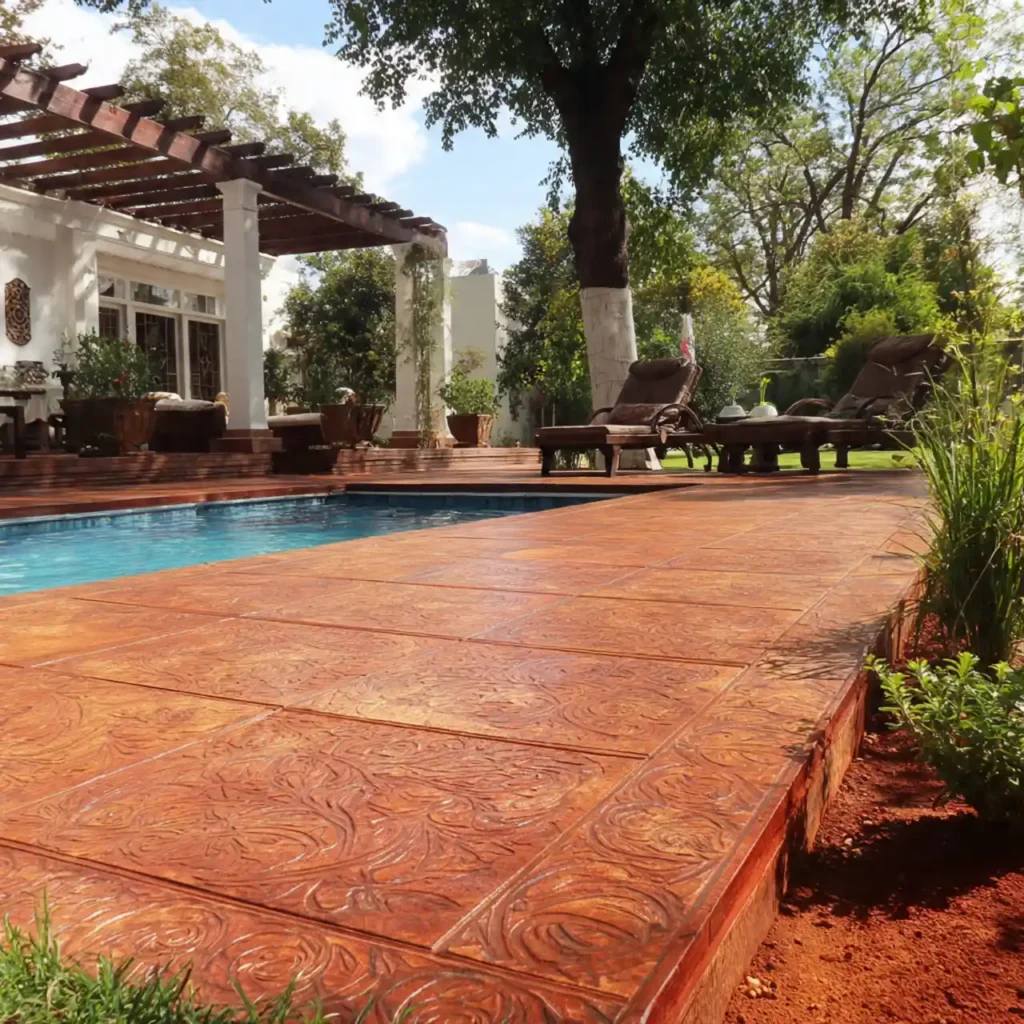
Stamped concrete starts as ordinary concrete, but contractors press patterns into the surface before it cures. The result mimics natural stone, brick, slate, or cobblestone, minus the high material cost and the long installation time of laying individual units. Decorative concrete is a broader category that also includes exposed aggregate finishes, coloured and stained surfaces, and polished concrete floors.
For Bulawayo homeowners, the appeal is straightforward. A stamped concrete driveway or patio delivers the visual richness of imported stone at a fraction of the price, and it installs faster than traditional paving. It also creates a single, joint-free surface, which matters in a region where shifting clay soils can heave individual pavers out of alignment over time.
Why Heat Changes the Equation
Concrete and heat have a complicated relationship. Hot weather speeds up the chemical reaction that makes concrete set, which sounds helpful until you realise what it actually does to the finished surface. According to Concrete Network’s guidance on hot weather pouring, contractors should wet down the subbase before a pour and schedule work for early morning or late evening to avoid peak heat. Skipping this step lets the surface dry out before it can be stamped properly, leading to weak texture definition and a higher risk of cracking.
The core danger is something engineers call plastic shrinkage cracking. As one industry resource explains, a high evaporation rate during placement and early curing significantly raises the likelihood of this type of cracking, and the resulting surface becomes more vulnerable to water and chemical intrusion over time. In a city where the dry season stretches from April through October and afternoon temperatures regularly sit in the high twenties to low thirties, this isn’t a minor technicality. It’s the single biggest factor separating a stamped concrete job that lasts fifteen years from one that cracks within its first summer.
How Tusker Manages Concrete in Bulawayo’s Climate
Our teams build every decorative concrete project around the local weather rather than fighting against it. We schedule pours for the cooler parts of the day, typically early morning, so the concrete doesn’t fight rapid surface drying before we’ve finished stamping and texturing. We also wet the sub-base ahead of placement, which keeps ground temperature from pulling moisture out of the mix too quickly.
Mix design matters just as much as timing. We adjust water content, use appropriate retarding admixtures when a project needs extra working time, and select the correct concrete mix for the load and finish required. Because decorative work depends on getting the stamp pattern crisp before the surface firms up, our crews stage their tools, release agents, and stamping mats in advance so nothing slows down once the pour starts.
Curing Properly After the Stamp Goes In
Stamping the pattern is only half the job. Curing decides whether that pattern stays crack-free for years. We apply curing compounds or moist curing methods immediately after finishing, which slows surface evaporation and lets the concrete hydrate fully rather than drying out under direct sun. This step protects both strength and appearance, since a slab that cures too fast often develops a dusty, weak surface layer that chips and fades faster than it should.
Sealing comes next. A quality sealer locks in colour, resists UV fading from Bulawayo’s intense sunshine hours, and adds a layer of protection against the occasional heavy summer downpour. We typically recommend resealing every two to three years, depending on foot traffic and sun exposure, to keep colours vibrant and the surface properly protected.
Where Stamped Concrete Works Best Around Bulawayo Properties
Driveways are the most popular application, and for good reason. A stamped concrete driveway handles vehicle weight well when properly reinforced, resists the cracking that plain concrete sometimes shows in expansive clay soils, and gives a home genuine kerb appeal. Patios and pool surrounds come a close second, since decorative finishes pair naturally with outdoor entertaining spaces and work well alongside paving or artificial grass installations for a cohesive look.
We’ve completed decorative concrete projects in suburbs including Hillside, Famona, Khumalo, and Burnside, and the same heat-management principles apply regardless of which part of the city a project sits in. Soil conditions vary slightly from suburb to suburb, so our teams always assess each site individually before recommending a mix and finish.
Combining Decorative Concrete With Waterproofing and Drainage
Heat isn’t the only consideration. Bulawayo’s rainy season, running from November through March, brings its own demands. A decorative concrete surface needs correct falls and drainage built in from the start, or pooling water will eventually undermine the slab regardless of how well it handled the dry season. We often pair decorative concrete work with our waterproofing services on projects near retaining walls, basements, or pool decks, ensuring water management is sorted both above and below the surface.
This integrated approach reflects a broader pattern in hot, semi-arid climates. As the team at ECS notes in their guide to construction practices, basic precautions including mix designs that resist hot weather effects, combined with diligent moisture curing, substantially reduce the long-term damage that heat causes to concrete. Treating heat management as one part of a complete drainage and waterproofing plan, rather than an isolated step, gives Bulawayo property owners a surface built for the whole year, not just the dry months.
Cost and Maintenance Expectations
Stamped concrete generally costs less than imported natural stone paving but more than plain concrete, reflecting the additional labour involved in colouring, texturing, and sealing. The investment pays off in maintenance terms. Aside from occasional resealing and the standard sweeping or rinsing any outdoor surface needs, stamped concrete in Bulawayo doesn’t demand the joint maintenance that brick or block paving requires once weeds or ants start working into the gaps.
Homeowners planning a project should budget for a proper site assessment first. Soil type, drainage slope, and intended use, whether that’s a driveway carrying daily vehicle traffic or a quiet garden patio, all influence the right mix and reinforcement approach. Skipping this step to save money upfront tends to cost more later in repairs.
Ready to Start Your Stamped Concrete Project?
Bulawayo’s heat doesn’t have to be a barrier to a beautiful, durable decorative concrete surface. With the right timing, the right mix, and a contractor who plans around local conditions instead of ignoring them, stamped concrete performs reliably for many years. Tusker Civils & Landscapes has the local experience and equipment to get every pour right the first time.
Recent Posts:
Why Concrete Quality in Zimbabwe Varies So Much — And How to Ensure You Get the Best
Polished Concrete Floors in Bulawayo — The Trend Taking Over Modern Homes
Flooring Cost Guide for Bulawayo Homes — What to Budget Per Square Metre
Before and After: How Professional Paving Transforms Bulawayo Properties