
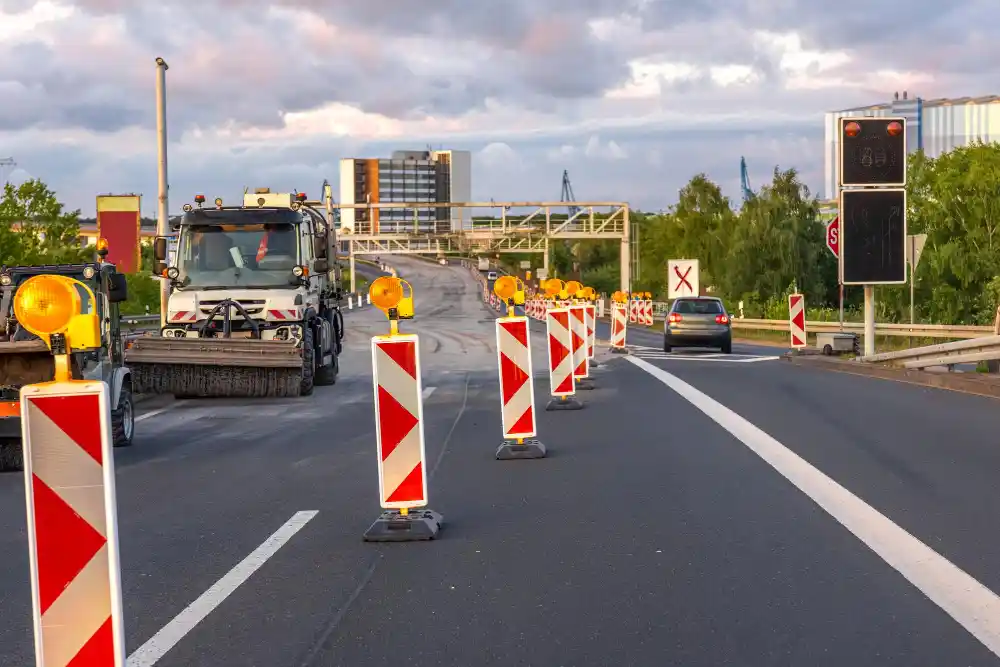
Building Safer Industrial Environments with Professional Roadworks in Zimbabwe
Industrial sites in Bulawayo, Zimbabwe, run on movement. Forklifts, delivery trucks, staff vehicles, and heavy machinery share the same internal roads every single day. When those roads deteriorate, safety deteriorates with them. Potholes cause vehicle damage and accidents. Poor drainage undermines road surfaces and creates slip hazards. Inadequate signage leads to collisions. Professional roadworks address all of these risks directly — and at Tusker Civils & Landscapes, we deliver road construction and rehabilitation services across Bulawayo that keep industrial sites safer, more efficient, and legally compliant.
Why Road Condition Directly Affects Site Safety
A damaged road is not just an inconvenience. It is an active hazard. Potholes jolt forklifts and can destabilise loads. Uneven surfaces cause vehicle operators to lose control. Poor drainage creates standing water that turns into slip zones for pedestrians and reduces tyre grip for heavy vehicles.
The UK Health and Safety Executive confirms that all two-way industrial roads should maintain a minimum width of 7.3 metres and that properly defined, maintained access routes are a core requirement of any safe industrial site. Zimbabwe’s industrial facilities face the same risks — compounded by seasonal rains, heavy truck traffic, and limited maintenance budgets that allow roads to deteriorate faster than they should.
Addressing road condition proactively saves money, reduces liability, and protects workers. It is not a luxury. It is a basic site management requirement.
What Professional Roadworks Deliver on Industrial Sites
Structural Roads That Handle Heavy Traffic
Industrial sites demand more from roads than residential or commercial properties do. Heavy delivery trucks, mining equipment, and loaded forklifts exert enormous pressure on road surfaces. An improperly constructed road fails quickly under these loads.
At Tusker Civils, our roadworks services in Bulawayo start with proper subgrade assessment and layerworks before any surface goes down. We engineer each road to handle its intended load — whether that means a light access road or a hardstanding designed for fully loaded HGVs. Building the correct base is what separates a road that lasts from one that starts cracking in the first rainy season.
Pothole Repairs That Actually Last
Many facility managers patch potholes with cold mix and move on. Within weeks, the same pothole reappears — often larger. This approach costs more in the long run and does nothing to reduce the safety risk.
Our teams carry out permanent cut-and-patch repairs. We cut back to stable material, rebuild the base where necessary, and apply proper wearing course material. The result holds. This matters because, as OSHA documents on construction site safety note, vehicles and equipment striking workers in deteriorated work zones account for a significant proportion of site fatalities. Removing the hazard permanently is the only responsible solution.
Stormwater Drainage That Protects the Road Structure
Water is the primary cause of premature road failure in Zimbabwe. Bulawayo’s summer rains are intense, and without proper kerbing, channels, and catch pits, water undermines road bases and creates hazardous surfaces almost immediately.
Tusker integrates stormwater drainage into every roadworks project. We install concrete kerbing, drainage channels, and catch pits that direct runoff away from the road surface and prevent water ingress into the base layers. This protects both pedestrians and vehicles — and it extends the serviceable life of the road significantly.
Road Markings and Defined Traffic Zones
Many industrial accidents happen not because roads are damaged, but because traffic flow is poorly defined. Pedestrian crossing points, loading zones, speed restriction areas, and one-way traffic routes all need clear marking to keep workers safe.
The HSE’s guidance on industrial site traffic management specifically highlights that road markings should designate traffic routes, non-parking areas, and give-way zones in line with standard road marking conventions. Tusker incorporates these requirements into our road construction and rehabilitation work, ensuring that newly constructed or resurfaced roads include the markings industrial sites need.
The Cost of Doing Nothing
Some facility managers delay road maintenance to control costs. In practice, waiting makes the problem more expensive. A pothole that costs a few thousand dollars to repair correctly today becomes a full road rehabilitation project — costing five to ten times more — if the sub-base is allowed to fail completely.
Beyond repair costs, there are liability implications. If a worker or contractor is injured on a deteriorated internal road, the site operator carries significant legal exposure. Professional roadworks reduce that risk. They also reduce vehicle maintenance costs — damaged roads are harder on tyres, suspension systems, and undercarriages, and those costs accumulate quickly across a fleet.
Tusker’s civil construction services allow Bulawayo businesses to address these risks before they become expensive incidents, rather than after.
Combining Roadworks With Other Site Infrastructure
Road construction rarely happens in isolation on an industrial site. New access roads often require concrete hardstandings, stormwater structures, and complementary surfacing. Tusker handles all of these under one contract.
If your site also needs concrete work for hardstandings or floor slabs, paving for lighter-duty areas, or waterproofing for structures adjacent to the road project, we coordinate everything through a single point of contact. This approach eliminates the coordination delays and cost overruns that come from managing multiple contractors on the same development.
Tusker Civils: Bulawayo’s Industrial Roadworks Specialists
Tusker Civils & Landscapes brings more than a decade of civil construction experience to industrial and commercial roadworks projects across Bulawayo and Zimbabwe. We understand local soil conditions, how Zimbabwe’s seasonal climate affects road structures, and what industrial clients need in terms of scheduling and minimum site disruption.
Our teams work across Bulawayo’s industrial suburbs and beyond, delivering road construction, rehabilitation, pothole repairs, drainage, and parking hardstandings that meet the demands of active working sites.
Get a Roadworks Quote for Your Industrial Site
If your industrial site in Bulawayo has roads that need attention, do not wait until the damage becomes a safety incident or a significantly larger repair bill. Contact Tusker Civils & Landscapes today for a professional site assessment and itemised quote.
WhatsApp or call us directly to book a site visit, or submit your enquiry through our contact page. We respond promptly and work around your operational requirements.
Request a Free Roadworks Quote →
Recent Posts:
Asphalt vs Concrete Roads in Zimbabwe — Which Is More Cost-Effective Long Term?
The True Cost of Poor Road Construction in Zimbabwe — And How to Get It Right
Why Structural Steelwork Is the Future of Commercial Construction in Bulawayo
Custom Steel Gates in Zimbabwe: What to Expect from Design to Installation