
Everything You Need to Know About Damp Proofing in Bulawayo
Damp is one of the most common threats facing homes and commercial buildings in Bulawayo. Heavy summer rains, rising ground moisture, and older masonry all combine to create the perfect conditions for damp to take hold. Left untreated, damp weakens plaster, rots timber, and damages paintwork. Fortunately, several proven damp proofing methods exist to protect your property. In this guide, Tusker Civils and Landscapes explains the different damp proofing options available to Bulawayo property owners, and how to choose the right one for your building.
What Damp Proofing Really Means for Your Bulawayo Home
Damp proofing is a moisture-control treatment that stops ground and surface moisture from entering a wall or floor. Unlike full waterproofing, which resists water under pressure, damp proofing manages lighter moisture levels such as rising damp and vapour transmission. Many Bulawayo homeowners confuse the two terms, so it helps to understand the distinction before choosing a treatment. According to Wikipedia’s overview of damp proofing, the technique is applied to walls and floors specifically to prevent moisture from passing into interior living spaces.
Because Bulawayo experiences both a dry season and an intense rainy season between November and March, properties face constant pressure from shifting moisture levels. As a result, correct damp proofing protects your investment year-round rather than only during storms.
Common Causes of Damp in Bulawayo Properties
Before choosing a damp proofing method, it helps to understand where the moisture comes from. Rising damp occurs when ground moisture travels upward through masonry via capillary action. Penetrating damp, on the other hand, develops when rain forces its way through cracked walls, damaged mortar, or poor pointing. Condensation is a third cause, forming when warm, humid air meets a cooler surface inside the home.
Older Bulawayo suburbs, along with properties that lack a damp-proof course altogether, are especially prone to these issues. If you notice peeling paint, a musty smell, or a visible tide mark near your skirting boards, your property likely needs professional attention. Our waterproofing services in Bulawayo cover damp diagnosis and treatment for exactly these scenarios.
Different Types of Damp Proofing Methods
There is no single damp proofing solution that suits every building. Instead, the right method depends on your wall construction, the source of the moisture, and the age of the structure. Below are the main damp proofing methods used across Bulawayo today.
Damp-Proof Courses (DPC)
A damp-proof course is a physical barrier built into a wall, usually just above ground level, to block rising moisture. Materials range from bitumen and slate to modern plastic strips. New builds always include a DPC as standard, but older Bulawayo homes often lack one or have a failed course that needs replacing. Installing or repairing a DPC remains one of the most reliable long-term damp proofing methods available.
Chemical Damp-Proof Injections
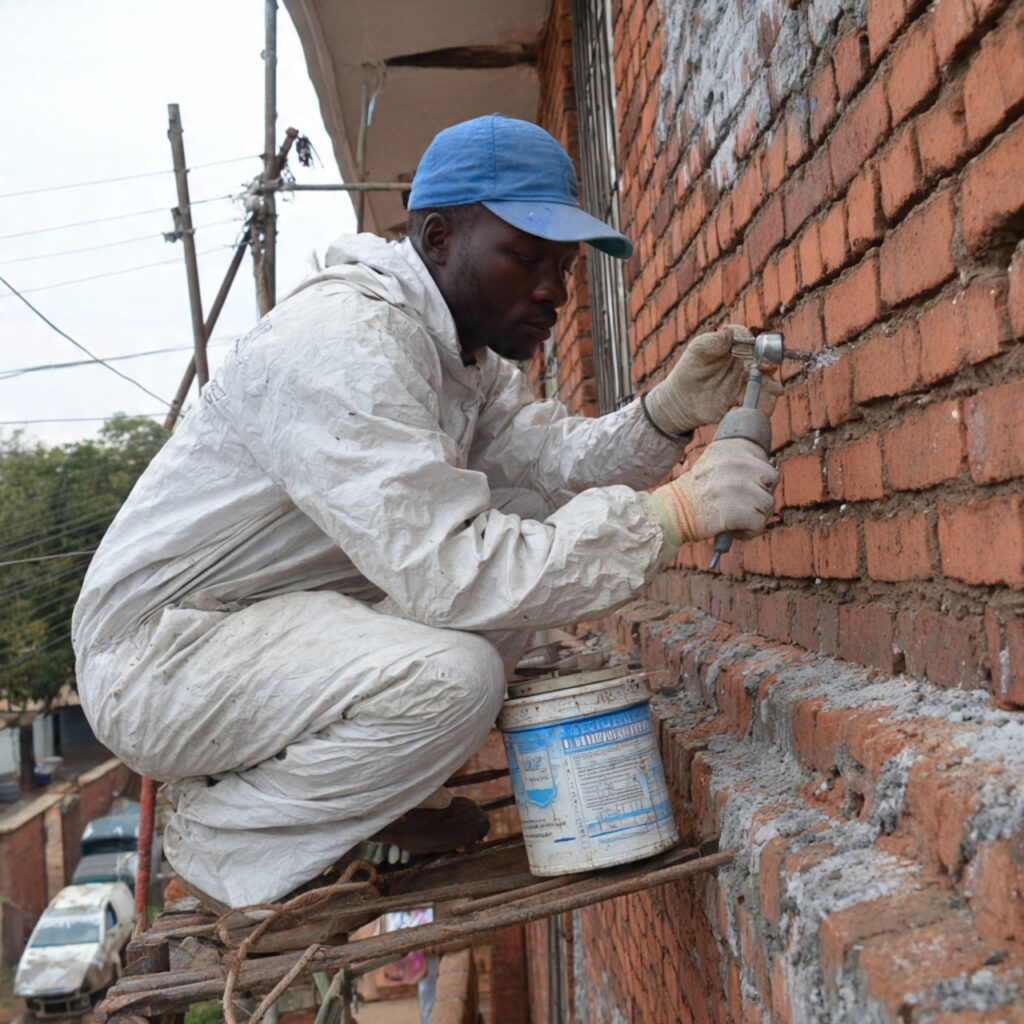
Where installing a physical DPC is impractical, a chemical injection offers an effective alternative. Contractors drill a series of holes along the base of the affected wall and inject a water-repellent cream or fluid. The chemical spreads through the masonry and forms a hydrophobic barrier that blocks capillary rise. This method suits older Bulawayo properties where removing bricks to fit a physical barrier would cause unnecessary damage.
Damp-Proof Membranes
Damp-proof membranes are flexible sheets, often made from polyethylene or bituminous felt, laid beneath concrete floor slabs or across wall cavities. They stop ground moisture from migrating upward through the floor and into the living space. For Bulawayo properties built directly on graded soil, a correctly installed membrane is essential before any new flooring or slab work begins.
Cementitious and Surface Coatings
Cementitious coatings are applied directly to walls or floors as a protective render. Once cured, they resist moisture penetration and can be finished with plaster or paint. This method works well for below-ground walls, retaining structures, and basements that face light to moderate moisture exposure rather than standing water.
Crystalline Waterproofing for Concrete Structures
Crystalline treatments penetrate deep into concrete, reacting with moisture to form crystals that block capillary pathways permanently. Because the treatment becomes part of the concrete itself, it even seals hairline cracks that develop later. This makes it a strong choice for concrete basements, retaining walls, and water-retaining structures across Bulawayo.
Cavity Wall Construction
Cavity walls separate the inner and outer wall skins with an air gap, allowing any moisture that penetrates the outer leaf to drain away before it reaches the interior. Correct ventilation of the cavity is essential, since a blocked or bridged cavity can trap moisture rather than releasing it. This method suits new builds and major renovations more than retrofit projects.
Damp Proofing vs Waterproofing: Which Does Your Property Need?
Choosing between damp proofing and waterproofing depends on the severity of the moisture problem. Damp proofing handles vapour transmission and light ground moisture, making it suitable for most above-ground walls. Waterproofing, however, is engineered to resist water under real hydrostatic pressure, so it becomes necessary for basements, water tanks, and any surface exposed to standing water.
The Property Care Association’s guidance on rising damp treatment notes that a proper diagnosis should always come before choosing a remedial method, since an undersized treatment simply fails again within a few years. Our team follows the same principle on every Bulawayo project: we inspect first, then recommend the correct treatment rather than a one-size-fits-all fix.
Why Bulawayo Properties Need Professional Damp Proofing
Bulawayo’s climate places real demands on buildings. Intense UV exposure dries out and cracks poorly maintained coatings, while heavy rainfall between November and March tests every weak point in a structure. Consequently, a damp proofing job that looks fine on day one can fail within a season if it uses the wrong materials or skips proper surface preparation.
Professional installation also protects your investment in other areas of the property. A leaking foundation, for example, can undermine nearby paving and hardstanding areas, while damp walls compromise attached steel fixtures over time. Treating the root cause early always costs less than repairing the resulting structural damage later.
Why Choose Tusker Civils & Landscapes for Damp Proofing in Bulawayo
Tusker Civils and Landscapes has delivered civil construction and waterproofing solutions across Bulawayo for over a decade. Our teams inspect each property, diagnose the true source of the moisture, and apply the damp proofing method best suited to your building type and budget. Every installation comes with a clear workmanship guarantee, so you know exactly what is covered.
We serve homeowners and businesses across Bulawayo’s suburbs, including Hillside, Famona, Burnside, Khumalo, and Sauerstown. Whether you are dealing with a persistent damp patch or planning damp proofing for a new build, our team brings the right expertise to the job.
If you suspect damp is affecting your Bulawayo property, do not wait for the problem to spread. Contact Tusker Civils and Landscapes today for a professional inspection and a clear, honest quotation.
Recent Posts:
Best Waterproofing Methods for Roof Balconies in Bulawayo
Paving Your Business Parking Lot in Bulawayo — What You Need to Know
The Science Behind Green Walls: How Living Walls Reduce Heat in Zimbabwean Buildings
How Green Walls Increase Property Value in Bulawayo’s Growing Real Estate Market