
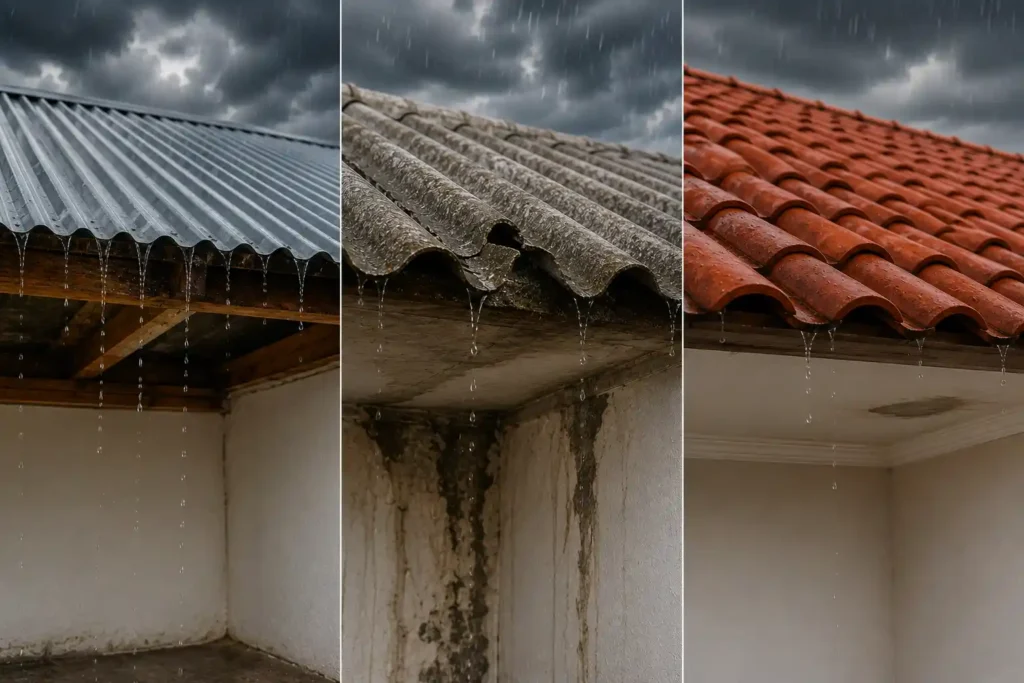
The Pros and Cons of IBR and Tiled Roofs in Bulawayo’s Climate
Bulawayo homeowners rarely think about their roof until the first heavy summer storm finds a gap. Then the question becomes urgent: does an IBR roof, an old asbestos roof, or a tiled roof hold up better against Zimbabwe’s climate? Each material fails in its own way, and knowing the pattern helps you catch a leak before it becomes a ceiling repair. This guide breaks down how each roofing type behaves in Bulawayo’s heat, hail, and rainy-season downpours, and where Tusker Civils & Landscapes fits in when your roof needs attention.
Understanding Bulawayo’s Climate and Why It Matters for Roofing
Bulawayo sits on a plateau with a long dry season and a short, intense rainy season running from November through March. Roofs bake under strong UV radiation for months, then face sudden thunderstorms with heavy rain and occasional hail. That swing between extreme heat and sudden moisture is what stresses roofing materials most. A roof that copes well with heat may still crack under a hailstorm, and a roof that sheds rain well may still fail after years of daily thermal expansion and contraction. This is the backdrop against which IBR, asbestos, and tile all have to perform.
IBR Roof Sheeting in Bulawayo’s Climate
IBR, short for Inverted Box Rib, is galvanised steel sheeting with a strong trapezoidal profile. It is the material most commercial buildings and many newer Bulawayo homes now use, largely because it installs quickly and sheds water efficiently when fitted correctly.
How IBR Performs Under Sun, Wind and Rain
The steel core gives IBR strong resistance to hail and wind uplift, and the ribbed profile channels water off the roof fast during a downpour. Bulawayo’s intense sun does take a toll on the protective zinc coating over time, and unpainted sheets can start to lose their shine within a decade under constant UV exposure. The bigger risk, though, sits at the fasteners and overlaps rather than in the sheet itself.
Where IBR Roofs Typically Start Leaking
Almost every IBR leak traces back to a screw, a lap joint, or a flashing detail rather than the steel failing outright. Rubber washers on the fixing screws harden and crack after repeated heating and cooling, and once that seal goes, water finds its way through the screw hole during the next storm. Poorly sealed side laps and ridge flashings cause the same problem. This is why correct installation matters more for IBR than for almost any other roofing material, and it is also why Tusker’s steelworks team pays close attention to fastener spacing and flashing detail on every roof structure they fabricate.
Asbestos Roofing: Durability Versus Hidden Risk
Asbestos cement sheeting was standard across Bulawayo’s older suburbs for decades, and a large number of those roofs are still in service today. The material genuinely is tough, but its ageing pattern brings a health risk that steel and tile simply do not carry.
Why So Many Older Bulawayo Homes Still Have Asbestos Roofs
Asbestos cement sheets were prized for fire resistance and a long service life, and many were installed well before the health risks became widely understood. Replacing an intact roof is expensive, so plenty of Bulawayo homeowners have simply left ageing asbestos sheeting in place rather than disturb it. According to the World Health Organization, there is no safe level of asbestos exposure, and the risk grows precisely as the material weathers and begins to crumble.
The Leak Pattern Asbestos Sheets Follow
Asbestos cement becomes brittle with age, and hairline cracks tend to appear first around nail holes and sheet overlaps, exactly the spots most exposed to movement and vibration. Once a crack forms, water tracks along it during rain and eventually shows up as a stain on the ceiling below, often some distance from where the crack actually is. Because cutting or disturbing weathered asbestos releases fibres into the air, any repair or removal needs careful handling rather than a quick patch job. If a property needs an old asbestos roof taken down safely, Tusker’s demolition team in Bulawayo manages that process before a new roof structure goes up.
Tiled Roofs in Bulawayo: Classic Look, Climate Trade-offs
Clay and concrete tiles show up mostly on older, established Bulawayo properties, particularly in suburbs like Burnside where larger homes were built with pitched, tiled roof structures rather than flat slabs.
Clay and Concrete Tile Performance in Heat and Storms
Tiles handle sustained heat well, since both clay and concrete resist UV degradation far better than exposed steel or ageing asbestos cement. The trade-off shows up during storms and physical impact rather than sun exposure. According to the Tile Roofing Industry Alliance, clay and concrete tile withstand heavy rain and wind well when installed correctly, though individual tiles can still crack under hail impact or foot traffic during maintenance. A tiled roof rarely fails all at once. Instead, one or two cracked or displaced tiles let water through at a single point, and the underlying batten or timber structure absorbs the damage long before anyone notices a stain indoors.
Which Roof Leaks First? A Straight Comparison
None of the three materials fails uniformly, so the honest answer depends on what “leaking first” actually means. A correctly installed IBR roof is the least likely to leak in its first ten years, provided the fasteners and flashings were done properly, but a rushed installation can leak within a single rainy season. Asbestos sheeting can stay watertight for decades while ageing quietly in the background, then develop cracks fairly suddenly once the material becomes brittle enough. Tiled roofs sit in between: individual tiles crack sporadically over the decades rather than the whole roof failing together, so a tile roof tends to develop small, localised leaks well before it needs full replacement. In practice, poor installation or a lack of maintenance causes more leaks in Bulawayo than the roofing material itself.
Protecting Whichever Roof You Have
Whatever material sits above your ceiling, the same principle applies every year before the rainy season starts: inspect the fasteners, flashings, and joints, because that is where nearly every leak actually begins. Tusker Civils & Landscapes has spent sixteen years working on Bulawayo properties, and roof waterproofing is one of the services requested most often once the first rains expose a weak point. The team’s waterproofing division inspects flat and pitched roofs alike, identifies the source of a leak rather than just treating the visible stain, and applies the membrane or sealant system suited to the specific roof type and its remaining lifespan.
Talk to Tusker Civils & Landscapes About Your Roof
A roof leak rarely stays small for long in Bulawayo’s climate, and the underlying cause is not always obvious from inside the house. If you are dealing with a stain on the ceiling, a section of lifting asbestos sheeting, or a scattering of cracked tiles after the last storm, Tusker Civils & Landscapes can inspect the roof, confirm what is actually happening, and recommend a fix that matches the material you already have rather than a costly full replacement you may not need.
Latest Posts: