
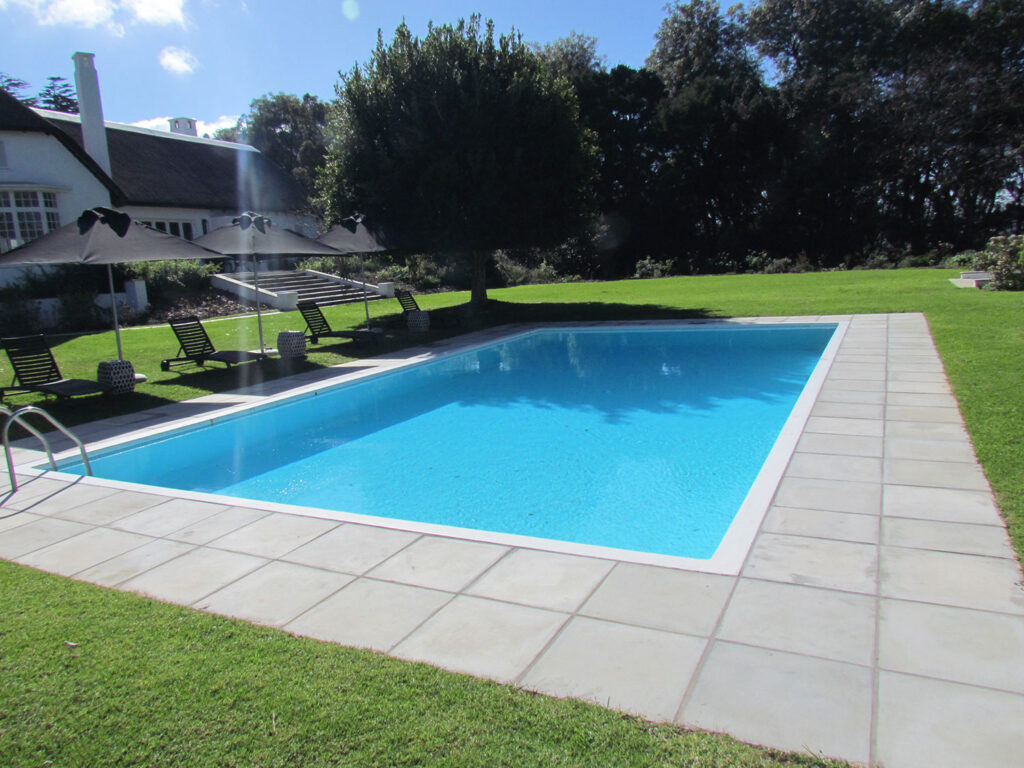
Patio and Pool Surround Paving in Zimbabwe
A pool is the centrepiece of any luxury home, and the paving around it is just as important. Good pool paving in Zimbabwe must stay cool underfoot, drain quickly and grip when wet. It must also look stunning. In this guide, Tusker Civils and Landscapes explains how to choose patio and pool surround paving for Zimbabwean weather. We cover heat reflection, drainage, slip resistance, materials and design ideas inspired by leading projects in South Africa and the USA.
Why Pool Paving in Zimbabwe Needs Special Attention
Zimbabwe’s climate is hard on outdoor surfaces. Summers are hot, UV is strong, and many pools have little shade. Then the rainy season brings heavy downpours that flood poorly graded areas. Bulawayo also has cool, dry winter nights. These swings stress cheap paving and punish unsealed surfaces.
The pool area is also the one place where bare feet, water and chemicals meet. Therefore, your choice of material affects safety, comfort and long-term cost. A beautiful deck that burns feet or turns slippery is a failed investment. Good paving also protects your property value, because buyers notice outdoor entertainment areas.
Heat Reflection: Keeping Your Pool Deck Cool
Heat is the first concern. Dark surfaces absorb sunlight and quickly become painful to walk on. Light colours reflect far more of it. A US guide explains that light-coloured travertine reflects sunlight and stays cooler than dark stone or concrete. You can read more in Flooring Clarity’s travertine guide. Another US supplier adds that the porous structure of travertine helps dissipate heat, which suits hot climates. Its travertine vs pavers comparison covers the trade-offs well.
Concrete pavers also work well if you choose pale shades. Cream, sand and light grey cope far better than charcoal. Avoid black stone and dark terracotta around pools in full sun. Porcelain needs care too, since it can run hotter than natural stone.
Shade helps just as much as colour. A pergola, shade sails or a covered patio cools the surface and extends your usable hours. Trees add shade as well, but fallen leaves need regular sweeping.
Drainage: Preventing Puddles and Deck Damage
Drainage separates professional installations from poor ones. Water must run away from both the pool and the house. We recommend a gentle fall of about 1 in 50 to 1 in 100 away from the pool edge. Channel drains or soakaways then carry water off the site. During heavy rains, poor falls cause pooling, algae and slippery patches.
Ground preparation matters just as much. A compacted sub-base stops sinking and cracking. Edge restraints stop pavers from drifting over time. Pool water, salt and chlorine also affect jointing materials, so choose suitable sand and sealers.
Material choice helps too. The same US source notes that the natural porosity of travertine lets water drain quickly and reduces slip hazards. Interlocking concrete pavers also drain through their joints, provided the base is correct. In addition, separate the deck from the pool shell with expansion joints. Stone and concrete expand in heat, and without movement joints the deck can crack or lift against the coping.
Slip Resistance: Safe Surfaces for Wet Feet
Safety comes next, especially in homes with children or older relatives. A smooth wet surface is dangerous. Look for textured finishes such as honed, tumbled, brushed or shot-blasted faces. One US guide notes that slate has a natural texture that gives strong traction even when wet. Similarly, tumbled travertine generally offers better wet-weather traction.
Porcelain is another option. Mineral Tiles explains that porcelain pavers are impervious, resist mildew and are slip-resistant by nature. A US pool builder also notes that spray-texture deck coatings add grip and absorb less heat than typical decking. You can see these options in Cody Pools’ decking guide.
Whatever you choose, ask your supplier for slip-resistance data. Bullnose or rounded edges at the coping also reduce injuries. Finally, clean the deck regularly. Algae, sunscreen oils and leaf stains can make any surface slippery.
Best Materials for Pool and Patio Paving in Zimbabwe
Concrete pavers are the practical choice for most homes. They are affordable, widely available and easy to repair. A South African property blog notes that concrete is generally the more economical choice upfront. Its pool paving ideas article is a useful read. Choose a textured face in a light colour, and always seal the surface.
Natural stone suits luxury projects. Travertine is the classic premium choice, but it needs care. One US review warns that travertine needs diligent sealing to protect against water penetration and staining. Slate and flagstone give a rugged, natural look with excellent grip. Zimbabwe also has a strong granite industry, so local stone is worth exploring. However, dark granite gets very hot, so pick lighter shades or flamed finishes.
Porcelain pavers give a sleek, modern look with low maintenance. They suit contemporary homes with clean lines. Just choose a textured, outdoor-rated product in a light colour.
Luxury Design Ideas from South Africa and the USA
Luxury pool paving is about layout as much as material. Large-format pavers create a modern, expansive look. Smaller tiles in traditional patterns feel more classic. A US guide lists French, Versailles, running bond and basketweave patterns, each giving a different visual effect. Matching the coping and deck creates a seamless edge.
South African designers often blend the pool deck into a wider entertainment area. Think stepped patios, built-in braai spaces and lawn borders. Stone Hardscapes offers a balanced review of the pros and cons of a luxury travertine deck. Together, these ideas show how to mix beauty with practical performance.
Borders and inlays add a premium touch, especially when contrasting stone or paver colours are used. Lighting, planting and water features then complete the scene. Our team can adapt these ideas to your home and budget.
Cost and Budget Considerations
Budget depends on material, site and ground conditions. Concrete pavers cost the least. Porcelain and natural stone cost more. Labour rises for intricate patterns, tight corners and sloping sites.
Preparation also takes a big share of the price. A South African guide explains that groundwork accounts for a large part of the total cost. You can see how pricing varies in this paving cost guide. Bosun’s paving advice also explains how thickness, colour and delivery affect the final price. Ask for itemised quotes so you can compare like with like.
Maintaining Your Pool Paving
Maintenance keeps your deck safe and attractive. Sweep it regularly and rinse away chemicals and sunscreen. Pressure-wash gently once or twice a year to remove algae. Reseal natural stone and concrete as the manufacturer advises. Top up the jointing sand when it washes out. Check drains before each rainy season, because blocked channels cause most flooding problems.
Get Your Pool Paving Quote from Tusker Civils and Landscapes
Tusker Civils and Landscapes designs and builds pool surrounds and patios across Bulawayo and Zimbabwe. We assess your site, advise on the right surface and give you a clear itemised quote. Call or WhatsApp us on 078 095 8746, or email build@tuskercivils.com to start your project.
]