
Paving Bricks vs Stamped Concrete for Driveways
Choosing between paving bricks vs stamped concrete is one of the biggest decisions in any driveway project. Both surfaces look smart, carry vehicles and add value to your property. However, they behave very differently under Zimbabwe’s heat, heavy summer rain and shifting soils. In this guide, Tusker Civils and Landscapes compare the two options in terms of cost, durability, repairs, looks and installation. By the end, you will know which surface suits your property and your budget.
What Is the Difference Between Paving Bricks and Stamped Concrete?
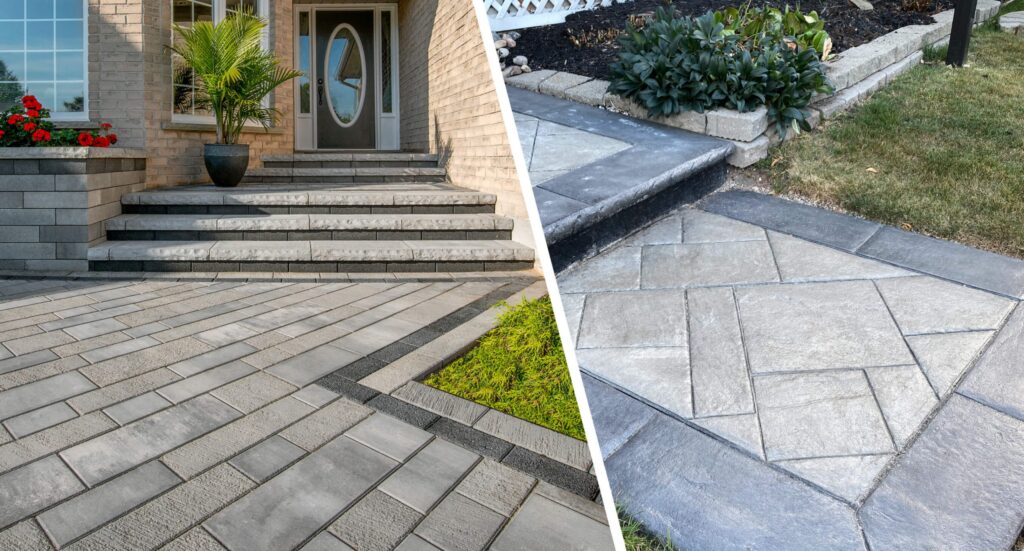
Paving bricks are small concrete or clay units laid on a compacted sub-base and a bed of sand. Each unit locks against its neighbours, so the surface works as a flexible mat. Most Zimbabwean suppliers sell standard 200 by 100 millimetre interlocking pavers. The 60mm thickness suits walkways, while 80mm suits driveways that carry cars every day. You can browse local suppliers through this directory of pavers and paving services in Zimbabwe.
Stamped concrete is a different product. Crews pour a single reinforced slab, then press patterns into the wet surface. They add colour hardener and a release agent, so the slab imitates brick, slate or cobblestone. After curing, a sealer protects the finish.
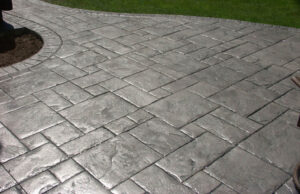
Because the slab is one rigid piece, it reacts to the ground very differently from pavers. The American Concrete Institute publishes widely used guidance on slab design, curing and joints.
Cost Comparison: Paving Bricks vs Stamped Concrete in Zimbabwe
Cost matters first for most homeowners, so let us start there. Paving brick prices are easy to check because suppliers publish them. For example, a Harare manufacturer lists 60mm grey pavers at about 18 US cents and 80mm pavers at about 24 cents, VAT included. You can check current figures on the HomeStyle price list. A standard paver covers 0.02 square metres, so you need about 50 per square metre before wastage.
Material is only part of the bill, though. Ground preparation often costs as much as the surface itself. Excavation, a compacted sub-base, bedding sand, edge restraints and labour all add up. In Bulawayo, a properly prepared brick driveway typically lands between US$30 and US$45 per square metre. Your final figure depends on paver price, slope, access and sub-base depth. Regional guides tell a similar story. This South African paving cost guide notes that groundwork takes a large share of the total price. A second pricing guide and Bosun’s paving advice show how site conditions and paver choice move the price.
Stamped concrete pricing is harder to pin down. It needs concrete, reinforcement mesh, colour hardener, release agent, stamping mats and sealer. It also needs skilled finishers, because the result depends on perfect timing during the pour. Expect a quality stamped slab to cost about the same as good brick paving, and sometimes more. Cheap quotes usually skip reinforcement or sealing, which causes problems later. Therefore, always ask exactly what each quote includes.
Durability in Zimbabwe’s Climate
Zimbabwe’s climate tests every driveway. Summers are hot, the rainy season brings heavy downpours, and some areas have expansive clay soils. Bulawayo even gets light winter frost. These conditions move the ground, so the surface above must cope with that movement.
Paving bricks handle movement well. Because each unit sits in sand, the surface flexes slightly instead of cracking. Water also drains through the joints, which reduces pooling after storms. Pavers 80mm thick perform well under daily car traffic when the sub-base is properly compacted. The Interlocking Concrete Pavement Institute explains how interlock spreads vehicle loads across the base.
Stamped concrete is rigid, so it cracks when the ground moves. Control joints guide cracks into straight lines, but hairline cracks still appear over time. Poor drainage and weak sub-bases make the problem worse. Good reinforcement, correct thickness and proper curing reduce the risk. Even so, a stamped slab is less forgiving than pavers on reactive soils. In addition, strong UV light fades the sealer, so the colour dulls without regular re-sealing.
Repairs and Maintenance: Where the Two Surfaces Differ Most
Repairs show the biggest practical difference. If a paver stains, sinks or cracks, you simply lift that unit and replace it. Settled areas are fixed by lifting the pavers, re-compacting the base and laying them again. Replacement pavers from the same batch blend in well. Paving Expert offers detailed laying and repair guidance for block paving.
Stamped concrete is much harder to repair. Cracks can be filled, but patches rarely match the original pattern or colour. Replacing a section means breaking out the slab and pouring again. The new colour often differs from the old, so the repair stays visible. Maintenance is heavier too. Most slabs need resealing every two to three years to hold their colour and resist oil and tyre marks.
Pavers need only light upkeep. Sweep them regularly, pull weeds from the joints and top up the jointing sand every few years. A wash with water refreshes the surface. Sealing is optional rather than essential. As a result, long-term upkeep costs are usually lower with paving bricks.
Appearance and Design Options
Both surfaces look good when installed well. Stamped concrete gives a seamless surface with realistic stone or slate textures. It has no joints, so it suits modern, minimalist homes. Colour and pattern choices are wide, but they are fixed once the slab is poured.
Paving bricks offer more flexibility in layout. You can mix colours, add borders and choose patterns such as herringbone, basket weave or stretcher bond. Curved edges and inlays are easy to add. Many Zimbabwean homeowners also like charcoal or terracotta pavers beside a green lawn. If you want ideas, ask us for our paving designs brochure with ten layouts.
Installation Time and Ground Preparation
Brick paving can be laid in stages and used almost immediately. Once the jointing sand is swept in and compacted, you can drive on it. Stamped concrete needs curing time instead. Light traffic usually has to wait several days, and the slab takes about 28 days to reach full strength. Heavy rain can also ruin a fresh pour. Consequently, pavers are easier to schedule during the rainy season.
Both options depend on good ground preparation. Remove topsoil and soft material first. Then compact a crusher-run or G5 sub-base and set proper falls so water runs away from the house. Cutting corners here causes most driveway failures, whichever surface you choose.
Which Is Better for Your Driveway?
For most Zimbabwean driveways, paving bricks are the safer choice. They tolerate ground movement, they are easy to repair and they offer flexible designs. They also suit sloping sites, reactive soils and owners who plan to stay long term.
Stamped concrete suits level sites with stable soils where you want a seamless, high-end look. Choose it if you accept resealing and the chance of hairline cracks. Whichever you pick, hire a contractor who can show you finished driveways. Workmanship matters as much as the material.
Get Your Driveway Quote from Tusker Civils and Landscapes
Tusker Civils and Landscapes designs and builds driveways across Bulawayo and Zimbabwe. We will inspect your site, advise on the right surface and give you a clear itemised quote. Call or WhatsApp us on 078 095 8746, or email build@tuskercivils.com to start your project.
Recent Posts:
- Why Is Paint Peeling Off My New House? A Guide for Bulawayo Home Owners
- Why Herringbone Paving is Used for Driveways & Heavy Traffic?
- How Not to Waterproof a Metal Roof in Bulawayo: Warnings to Homeowners
- What Are The Common Causes of Leaks on Metal Roofs in Zimbabwe?