
Common Roof Waterproofing Myths Bulawayo Homeowners Still Believe in 2026
Bulawayo’s weather swings hard. Long dry spells bake the soil, then the summer rains arrive fast and heavy. That combination stresses roofs, foundations, and walls in ways many homeowners underestimate. Old advice still circulates at braais and on neighbourhood WhatsApp groups, and some of it does real damage. Believing the wrong waterproofing myth can cost a Bulawayo homeowner thousands of dollars in repairs that a correct diagnosis would have prevented.
This guide breaks down the waterproofing myths that still shape decisions across Zimbabwean homes in 2026. Each section explains where the myth comes from, why it falls apart under scrutiny, and what actually protects a property. Tusker Civils and Landscapes has spent 16 years fixing the fallout from these misconceptions across Bulawayo’s suburbs, so the patterns below come from real jobs, not guesswork.
Why Waterproofing Myths Still Cost Bulawayo Homeowners So Much
Most waterproofing myths survive because they contain a grain of truth. A quick coat of sealant does slow down a leak. A dry ceiling does suggest a roof is coping. The trouble starts when a homeowner treats the partial truth as the whole story and skips the inspection that would catch the real problem. According to the US EPA’s guidance on moisture control, fixing seepage properly often requires grading, drainage work, and waterproofing together, not a single product applied once. That layered approach is exactly what gets lost when a myth simplifies the problem.
Tusker Civils’ own waterproofing service page covers roof membranes, basement tanking, retaining walls, and wet-area sealing for this reason. Water rarely enters a structure through just one weakness, so a plan built around a single myth usually misses at least one entry point.
Myth 1: A Coat of Waterproof Paint Fixes Everything
Waterproof paint has a place, but it is a thin, surface-level defence. It cannot resist standing water or ground pressure on its own. Engineers call that force hydrostatic pressure, and it builds steadily wherever water collects against a wall or beneath a slab. W. R. Meadows’ technical guide to waterproofing membranes explains that proper membrane systems are tested against this pressure using recognised industry standards, precisely because paint and thin coatings were never designed to hold back sustained water load.
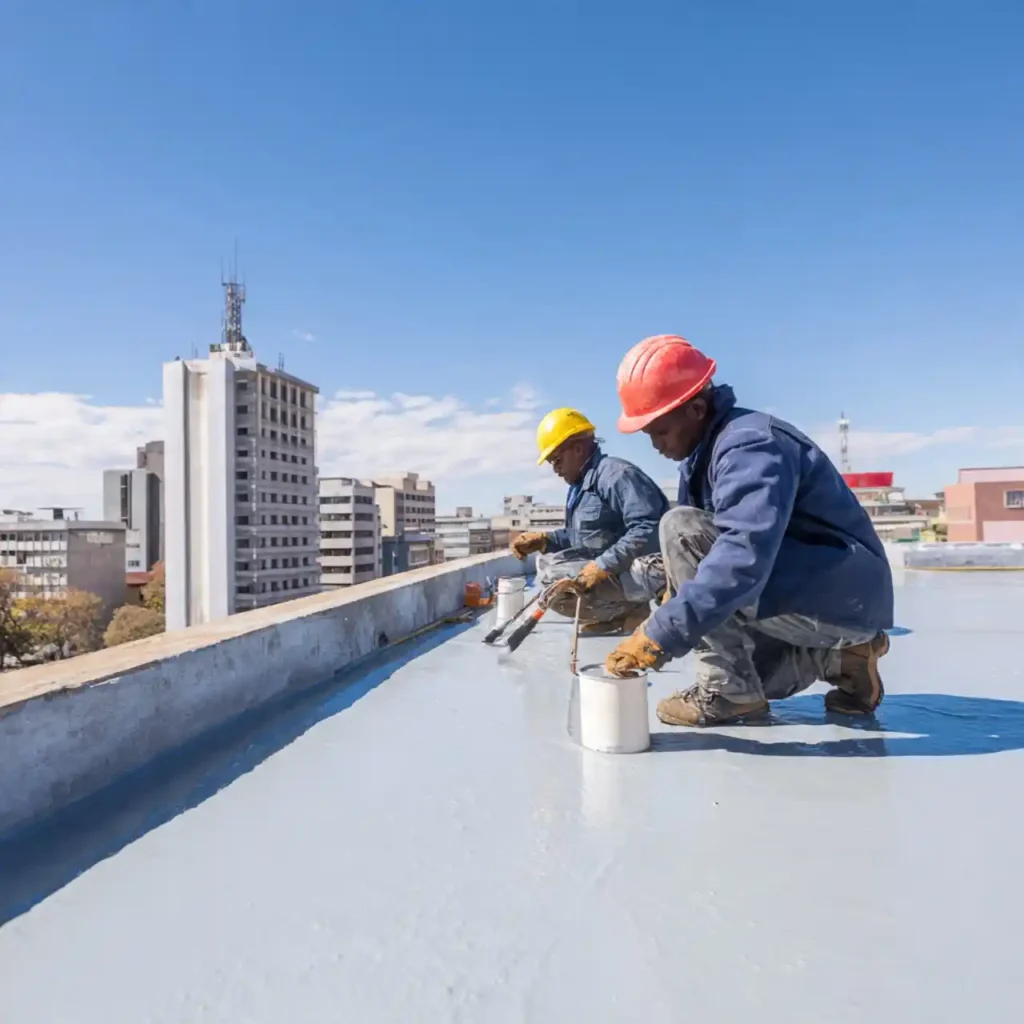
A Bulawayo flat roof carrying pooled rainwater after a summer storm needs a torch-on membrane or a properly applied polyurethane system, not a bucket of paint from the hardware store. Tusker’s waterproofing team in Bulawayo inspects the roof structure first, identifies where water collects, and only then recommends a system rated for that exposure.
Myth 2: No Visible Leak Means No Problem
Ceilings can stay dry for months while damp quietly spreads through a slab or a wall cavity. Water tends to travel sideways along beams and joints before it ever drips through in a visible spot. By the time a stain appears, the underlying membrane or damp-proof course has usually failed already, and the repair bill has grown along with it.
This myth catches out flat-roofed homes in particular, since flat roofs hide ponding water far more easily than pitched ones. An annual inspection after the rainy season catches lifted membrane edges and hairline cracks before they turn into ceiling damage. Tusker Civils recommends exactly that timing on its waterproofing FAQ, since April marks the point where Bulawayo’s rains have finished testing every weak spot on a roof.
Myth 3: Rising Damp and Condensation Are the Same Problem
These two issues look similar on a wall, but they need completely different fixes. Rising damp travels up through masonry from ground moisture, and it leaves a horizontal tide mark near skirting level along with crumbling plaster. Condensation forms when warm, moist air meets a cold surface, and it tends to appear higher on the wall or across a ceiling instead.
Treating condensation with a chemical damp-proof course wastes money, and treating rising damp with better ventilation does nothing at all. A simple test settles the question: tape a 300mm square of plastic sheeting flat against the wall, seal all four edges, and check it after 48 hours. Moisture on the wall side points to rising damp. Moisture on the room-facing side points to condensation. Tusker Civils runs this diagnosis as part of every damp assessment before recommending waterproofing or dampproofing work, because the wrong treatment can leave the actual problem untouched for years.
Myth 4: Once Waterproofed, Always Waterproofed
Waterproofing is durable, not permanent. A correctly installed chemical damp-proof course can last two to three decades, but a torch-on bitumen membrane typically needs recoating after ten to fifteen years, and liquid-applied polyurethane systems usually hold up for eight to twelve. Bulawayo’s hot, dry summers and concentrated rainy season place extra strain on membranes, since UV exposure and thermal cycling both accelerate wear.
Homeowners who assume a single application lasts the life of the building often skip the annual inspection that would flag early cracking or lifted membrane edges. Catching that early keeps the job small and cheap. Waiting until water actually gets through turns a maintenance task into a full concrete and structural repair, which costs far more.
Myth 5: DIY Waterproofing Saves Money
A do-it-yourself patch can look convincing for a season, then fail as soon as the next heavy rain tests it properly. Waterproofing membranes need correct surface preparation, primer compatibility, and application thickness to perform as designed. Skip any one of those steps, and the coating peels, blisters, or lets water track underneath it within a year.
Tusker Civils covers this trade-off in more depth on its company blog, where the team walks through which small roof fixes a confident homeowner can handle safely and which ones need a professional crew and the right equipment. Rushed DIY waterproofing rarely voids a warranty in Zimbabwe the way it might elsewhere, but it does void the peace of mind that comes with a properly diagnosed and guaranteed job.
Myth 6: All Waterproofing Products Work the Same Way
Bitumen membranes, acrylic coatings, polyurethane systems, and crystalline admixtures each suit different situations. A product built for a bathroom wet area will not necessarily withstand the sustained hydrostatic pressure found in a basement or a retaining wall below grade. Choosing based on price alone, rather than the specific exposure the surface will face, is one of the fastest ways to end up redoing the work within a year or two.
Tusker Civils matches the system to the application on every project, whether that means a torch-on membrane for a flat roof, a cementitious coating for a water tank, or tanking for a below-ground wall. The team’s combined experience across flooring, concrete, and waterproofing work means the surface preparation underneath the membrane gets the same attention as the membrane itself.
Getting Waterproofing Right the First Time in Bulawayo
Every myth above shares a common thread: it replaces a proper inspection with a shortcut. Bulawayo’s climate does not leave much room for shortcuts, since the gap between a dry season and a heavy storm can expose a weak point within days. A trained eye catches the difference between rising damp and condensation, between a membrane that still has years left and one that needs recoating now, and between a surface that needs paint and one that needs a full membrane system.
Tusker Civils and Landscapes offers free on-site assessments across Bulawayo before recommending any work, so homeowners get a diagnosis based on their specific property rather than a generic fix. Contact Tusker Civils for a waterproofing inspection before the next rainy season puts these myths to the test on your own roof or walls.
Latest Posts:
- “DIY Roof Repair in Bulawayo: What Actually Works and What Just Delays a Bigger Bill”
- How Load Shedding Is Secretly Damaging Your Roof and Gutters Without You Knowing
- 7 Warning Signs Your Zimbabwean Roof Is About to Fail (Number 4 Is the One Everyone Misses)