
What a Leaking Roof Is Really Costing Your Bulawayo Home
A leaking roof rarely feels urgent at first. A small stain appears on the ceiling. A faint musty smell lingers after the rain. Most Bulawayo homeowners note it, plan to “deal with it later,” and carry on. That delay is where the real cost begins.
A leaking roof does not stay a roof problem. Water finds the path of least resistance. It travels along rafters, seeps into ceiling boards, and settles behind walls long before it ever drips into a bucket on the floor. By the time a stain shows, the damage underneath is often weeks or months old. Understanding the true, compounding cost of a leaking roof is the first step toward protecting your home and your investment.
The Hidden Health Risk: Mould Growth From a Leaking Roof
Mould needs three things to grow: moisture, warmth, and an organic surface to feed on. A leaking roof supplies all three. Ceiling boards, ceiling insulation, ceiling battens, and ceiling cornices are all organic or absorbent materials. Once they stay damp for 24 to 48 hours, mould spores that are already present in the air begin to colonise the surface.
Bulawayo’s climate makes this worse than it looks on paper. The city experiences a concentrated summer rainy season followed by long dry stretches. That pattern traps moisture inside ceiling cavities, where warm air and poor ventilation let mould spread quietly between visible inspections. A homeowner may not smell or see anything until the colony has already established itself across a large section of ceiling.
The health consequences are well documented. The US Centers for Disease Control and Prevention (CDC) notes that exposure to damp, mouldy environments can trigger a stuffy nose, sore throat, coughing, wheezing, and irritated eyes, with people who have asthma or mould allergies facing more severe reactions. Children, the elderly, and anyone with a respiratory condition are especially vulnerable to ongoing exposure in a home with an unresolved leak.
Removing mould after it has spread is far harder, and more expensive, than preventing it. Contaminated ceiling boards and insulation usually need full replacement rather than a simple wipe-down, because spores penetrate porous materials and regrow if any moisture remains. The only lasting fix starts above the ceiling, at the source of the leak, which is why professional roof waterproofing matters more than a cosmetic patch.
Wiring Damage: The Danger You Cannot See
Most Bulawayo homes route electrical wiring through the ceiling void, the same space a roof leak floods first. This is where a leaking roof becomes a genuine safety hazard rather than an inconvenience.
Water tracks along cables, pools inside junction boxes, and settles around light fittings. Wet insulation around a wire does not need to stay wet to cause a problem. Moisture corrodes the copper conductor and the connection points inside switches, sockets, and distribution boards. Corrosion increases electrical resistance, and resistance generates heat. That heat can build for weeks after the ceiling looks dry again, long after the original leak seems fixed.
The National Fire Protection Association (NFPA), the world’s leading authority on fire and electrical hazards, has repeatedly linked moisture intrusion in wiring systems to an elevated risk of short circuits and electrical fires. A roof leak that reaches your ceiling wiring is not just a maintenance issue. It is a fire and electrocution risk that demands prompt attention, ideally from a qualified electrician working alongside your roofing contractor once the leak itself has been sealed.
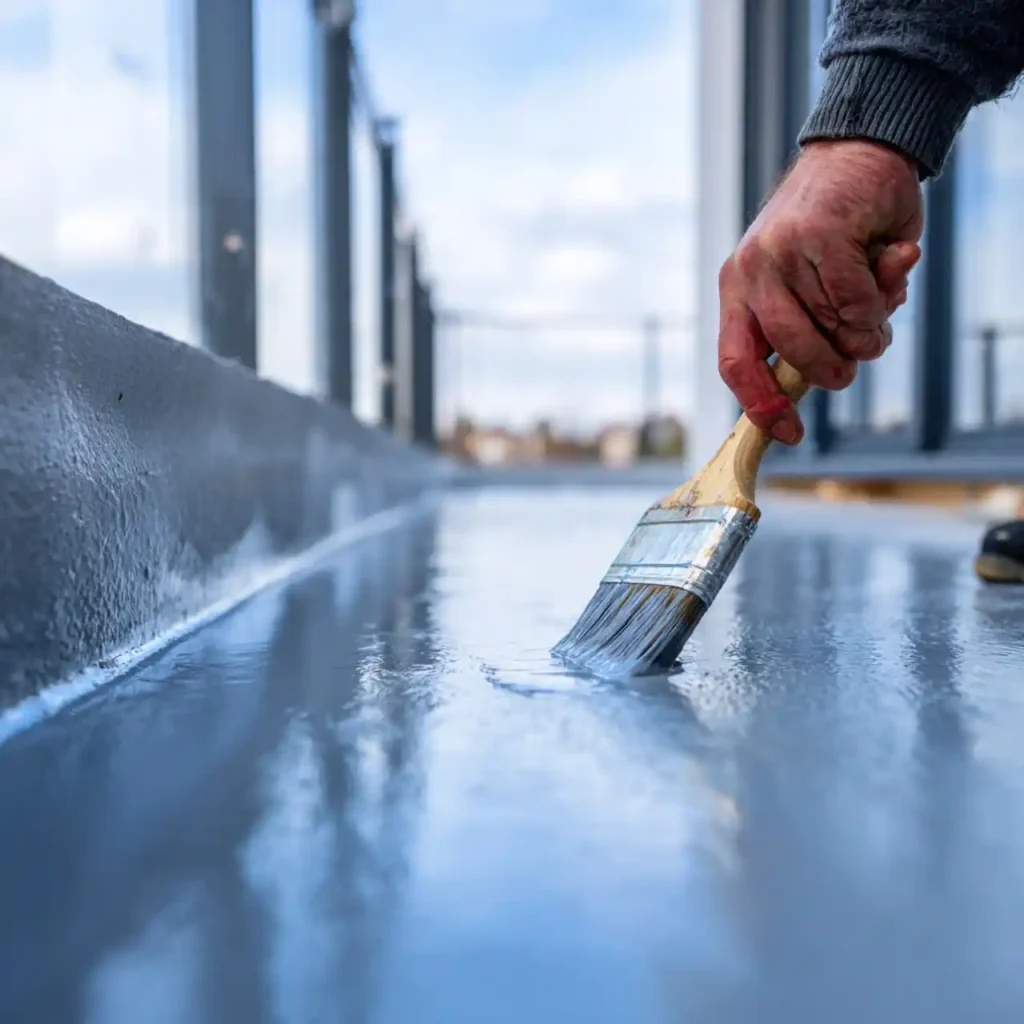
This is also why a competent waterproofing job addresses the whole roof system rather than just the visible crack. Parapet walls, roof penetrations, flashing details, and drainage falls all need proper attention, because water rarely enters where it eventually shows up on your ceiling.
Structural Damage and the Slow Decline of Your Property
Beyond health and safety, a persistent leak attacks the building itself. Timber trusses and roof battens absorb moisture and begin to rot from the inside, long before any sagging becomes visible from the ground. Steel roof sheeting and fixings corrode where water sits against them repeatedly. Concrete roof slabs develop spalling, where trapped moisture corrodes internal reinforcing steel, expands, and cracks the concrete surface from within.
None of this happens overnight, which is exactly why it is dangerous. A homeowner who patches a visible leak once a year, without ever addressing the underlying waterproofing membrane or concrete condition, can unknowingly let structural decay continue year after year. What starts as a small repair bill becomes a major renovation, and in the worst cases, a full roof or slab replacement.
The Financial Cost: What a Leaking Roof Does to Property Value
Every one of the problems above eventually shows up on a valuation report or a buyer’s inspection. Water stains on ceilings, a musty smell in bedrooms, visible mould, or a distribution board with a history of tripping are all red flags that reduce a buyer’s confidence and their offer price.
Property professionals internationally treat unresolved water damage as one of the most value-destructive issues a home can have, precisely because it signals ongoing, compounding problems rather than a single fixable defect. The Royal Institution of Chartered Surveyors (RICS) publishes consumer guidance urging property owners to take a proactive, holistic view of damp and mould, since unresolved moisture problems raise questions about a building’s overall maintenance history, not just the ceiling in question.
In Bulawayo’s property market, where buyers and their agents are increasingly aware of roof condition before making an offer, an unresolved leak can stall a sale entirely or force a price reduction well beyond the actual cost of repair. A prospective buyer factors in not just what they can see, but what they suspect is hidden behind it. Fixing the leak properly, and being able to show that it was fixed properly, protects both your home and its resale value.
Why Early Intervention Costs Less Than You Think
The pattern across mould, wiring damage, structural decay, and falling property value is the same. Every month a leak goes unaddressed, the cost of the eventual fix grows. A membrane repair costing a few hundred dollars today can become a full re-waterproofing project, a rewiring job, and a ceiling replacement combined if left for a rainy season or two.
Tusker Civils and Landscapes has spent 16 years diagnosing and resolving leak-related damage across Bulawayo homes and commercial properties. Our approach starts with identifying the actual source of water ingress, not just the point where it shows up inside. From there, we apply industry-approved waterproofing membranes and coatings suited to Bulawayo’s climate, backed by proper flooring and ceiling repair where damage has already set in.
If your roof has started showing warning signs, a stain, a smell, a tripping breaker after rain, the most cost-effective time to act is now. Contact Tusker Civils and Landscapes for a professional roof assessment before a small leak becomes a much larger bill.
Latest Posts:
From Matopo to Harare: How Zimbabwe’s Different Climates Destroy Roofs Differently
Waterproofing Myths Zimbabwean Homeowners Still Believe in 2026
“DIY Roof Repair in Zimbabwe: What Actually Works and What Just Delays a Bigger Bill”