
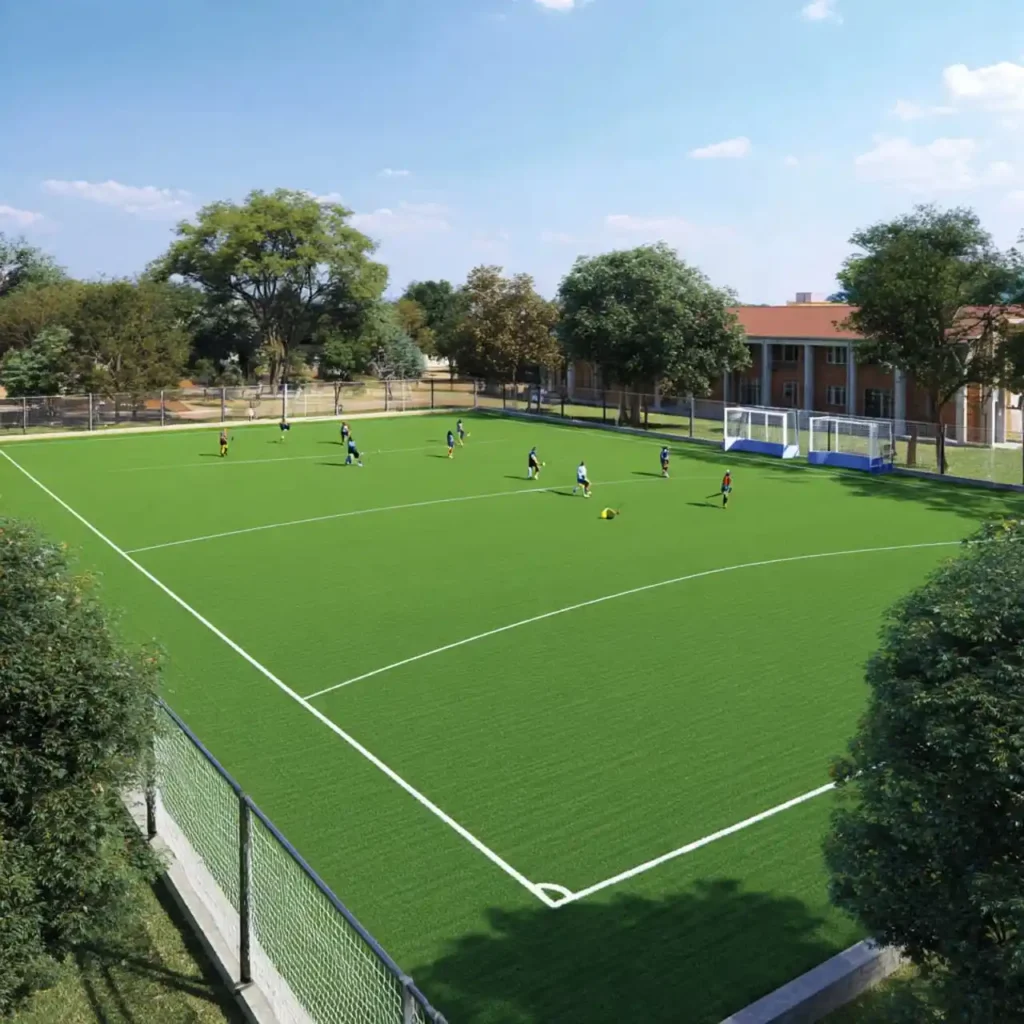
Why Bulawayo Schools Choose Artificial Grass Hockey Fields
Hockey has deep roots in Bulawayo. The city even hosted the Hockey Africa Cup of Champions, and school hockey remains one of the most competitive sporting codes in Matabeleland. Yet many schools still play on natural grass pitches that turn to dust in winter and mud in the rains. That inconsistency is pushing more schools toward a permanent fix.
Across the city, school sports departments are now installing artificial grass hockey fields in Bulawayo instead of replanting natural turf every season. The shift is not about fashion. It comes down to water, maintenance budgets, player safety, and match-day reliability. Below are five reasons behind the trend, and what schools should know before they commit to a synthetic pitch.
1. Water Scarcity Makes Natural Turf a Losing Battle
Bulawayo’s water supply has never been generous, and schools with large sports grounds feel that pressure first. A natural grass hockey field needs steady irrigation to stay level and playable, and any interruption to the water schedule leaves the surface patchy within weeks.
Synthetic turf removes that dependency almost entirely. Once installed, a hockey field needs no daily watering, so schools stop competing with the rest of the city for a scarce resource. For grounds that still need irrigation, such as surrounding gardens or cricket outfields, Tusker’s irrigation systems in Bulawayo are designed around exactly this kind of water pressure, using drip lines and smart controllers instead of open sprinklers.
Lower Water Bills, Fewer Compromises
A school that switches even one field to artificial turf can redirect its water budget to classrooms, boarding facilities, or other grounds that still need it. That trade-off is becoming harder to ignore as utility costs rise across Zimbabwe.
2. Bulawayo’s Climate Punishes Natural Grass
Bulawayo swings between a hot, dry season and a short, intense rainy season. Natural grass struggles with both extremes. Heat and drought thin it out, while heavy rain turns the same field into a slick, waterlogged mess that is unsafe for fast-moving hockey.
Artificial grass handles both conditions without missing a beat. It drains quickly after a downpour and holds its colour and structure through the dry months. Tusker’s artificial grass installations in Bulawayo use a UV-stabilised range built specifically for this climate, so the surface stays consistent whether it is match day in July or October.
3. School Budgets Cannot Absorb Constant Turf Repairs
Mowing, reseeding, fertilising, and patching worn-out sections all cost money, and school sports budgets rarely stretch far enough. A natural hockey pitch used every week by multiple teams wears out fast in the goal circles and centre channel, which means repeated repairs every term.
Synthetic turf shifts that spending pattern. The upfront installation costs more than seeding a lawn, but the ongoing maintenance is minimal. There is no mowing schedule, no fertiliser order, and no reseeding after a hard season. Schools that already use Tusker for other grounds, such as paving around courts and walkways, often extend the same long-term thinking to their playing fields once they see the maintenance savings add up.
Predictable Costs Over the Life of the Field
Because the surface does not depend on rainfall or soil condition, schools can plan a maintenance calendar years in advance instead of reacting to whatever the season throws at them.
4. A Safer, More Consistent Surface for Young Players
Hockey moves fast, and an uneven pitch increases the risk of ankle injuries, bad bounces, and awkward falls. Bare patches, hidden ruts, and compacted clay are common on older school grounds, especially where the same field also hosts football or athletics.
Artificial turf gives every player the same surface from the first whistle to the last. Ball roll stays predictable, footing stays firm, and there are no sudden dips where the grass has died off. The International Hockey Federation (FIH) has published construction guidelines specifically because surface consistency affects both performance and player safety at every level of the game, not just professional competition.
Physical activity itself carries real health benefits for school-age children, and a safer field means students are more likely to stay active rather than sit out through injury. The CDC’s physical activity guidelines note that regular activity supports fitness, bone strength, and mental health in young people, which gives schools another reason to protect training time rather than lose it to a damaged pitch.
5. One Field Can Serve More Than Hockey
Space is limited on most Bulawayo school campuses, and a field that only works for one sport is hard to justify. Artificial grass hockey surfaces can double as venues for football training, athletics warm-ups, or physical education classes, since the turf holds up under mixed use far better than natural grass does.
That flexibility matters for schools weighing the cost of a new pitch against the number of teams and activities it needs to support. A single well-built synthetic field often replaces what used to require two or three separate natural grass areas, each needing its own upkeep.
Getting the Installation Right
Not every artificial grass product suits a hockey field. Ball speed, shock absorption, and pile height all need to match how the sport is actually played, which is different from a residential lawn or a decorative garden area. Schools considering the switch should work with an installer who understands both landscaping and sports-specific turf requirements.
Tusker Civils & Landscapes has built its landscaping division around exactly this kind of project, covering everything from site preparation to final jointing and seaming. You can read more about the team’s approach on the About Tusker Civils page, or browse past installation write-ups on the Tusker Civils blog for a closer look at how similar projects come together.
Ready to Plan Your School’s Hockey Field?
Bulawayo schools are not switching to artificial grass because it looks good in a brochure. They are switching because it solves water shortages, survives the climate, protects tight budgets, and keeps players safer on the pitch. If your school is weighing the same decision, get in touch with the Tusker Civils team for a site assessment and a quote built around your grounds.
Recent Posts:
All About Shock Pads: Keeping Bulawayo Playgrounds Fall-Safe
How Much Does Artificial Grass for a Tennis Court Cost in Bulawayo?
Artificial Grass vs Natural Grass for Bulawayo Rugby Fields: Which Wins?