
How Bulawayo’s Climate Affects Your Roof Compared to Other Parts of Zimbabwe
A roof in Bulawayo fails for different reasons than a roof in Harare. The materials might be identical. The workmanship might be equally sound. Yet one roof cracks under relentless sun while the other rots under sustained damp. Zimbabwe’s climate changes sharply from region to region, and each version attacks a roof in its own way. Understanding this difference is the first step toward choosing a roofing and waterproofing strategy that actually lasts.
At Tusker Civils and Landscapes, we work on properties across Bulawayo, the Matopo area, and beyond. We see the same story repeat itself: homeowners install a roof designed for a generic climate, then wonder why it fails years ahead of schedule. This post breaks down how Zimbabwe’s climate zones damage roofs differently, and what that means for your property.
Why One Roofing Solution Doesn’t Fit All of Zimbabwe
Zimbabwe sits at high elevation across most of its landmass, but rainfall and humidity shift dramatically from west to east. Bulawayo and the Matopo Hills sit in a semi-arid zone, while Harare receives noticeably higher rainfall and holds more humidity through the wet season. These are not small variations. According to Britannica’s climate profile of Zimbabwe, rainfall drops sharply as you move southwest toward Bulawayo, while temperature patterns shift with altitude across the country.
A roof does not just sit under “Zimbabwean weather.” It sits under a specific combination of heat, humidity, rainfall intensity, and UV exposure unique to its location. That combination determines exactly how the roof will eventually fail.
The Matopo and Bulawayo Climate: Heat, UV, and Dry-Season Stress
Bulawayo and the surrounding Matopo area sit in a semi-arid climate zone. Average annual rainfall hovers around 600mm, and long dry spells are common. A peer-reviewed study on Bulawayo’s urban climate confirms this pattern, noting hot, dry conditions for much of the year with rainfall concentrated between October and March.
Thermal Cycling and Cracking in Semi-Arid Heat
Roofs in this region spend most of the year absorbing intense daytime heat, then cooling rapidly once the sun sets. This daily swing forces roofing materials to expand and contract constantly. Metal sheeting loosens at its fasteners. Sealants harden and lose flexibility. Concrete roof slabs develop hairline cracks that widen with every cycle. The Matopo Hills amplify this effect further, since exposed granite terrain and open properties in the area receive intense direct sun with little shade cover.
Drought, Dust, and Membrane Wear
Long dry seasons bring another problem: dust accumulation and UV degradation with no rainfall to wash the surface clean. Waterproofing membranes left unattended through a Bulawayo dry season often look intact on the surface while quietly losing elasticity underneath. Then the first heavy rain arrives, and cracks that formed silently during the drought suddenly become active leaks. This is why roof waterproofing in this region needs materials rated for UV resistance and thermal movement, not just water resistance.
Harare’s Climate: Humidity, Heavy Rain, and Storm Damage
Harare sits at a similar elevation to Bulawayo but receives considerably more rainfall, generally around 800mm annually, with sustained humidity through the wet season. The rainy season runs longer and delivers heavier, more concentrated downpours, often driven by seasonal shifts in the Intertropical Convergence Zone.
Ponding and Waterproofing Failures on Flat Roofs
Flat and low-pitched roofs in Harare face a different enemy: standing water. Higher rainfall volumes mean water has less time to drain between storms, and any low point on a flat roof becomes a pond. Ponded water finds every weakness in a membrane or concrete slab far faster than intermittent Bulawayo rain does. Poorly detailed roof penetrations, parapet walls, and drainage outlets become the weak points that eventually let water through.
Hail and Wind During the Rainy Season
Harare’s wet season also brings more frequent convective storms, which can carry strong winds and occasional hail. These events stress fasteners, flashing, and roof sheeting joints in ways that a drier climate rarely does. Sustained humidity between storms also encourages algae and moss growth on roof surfaces, which traps moisture against the material and accelerates deterioration from underneath.
The Common Thread: Water Always Wins
Despite these regional differences, one truth holds across every climate zone in Zimbabwe: water eventually finds the weakest point in a roofing system. In Bulawayo and the Matopo area, that weak point usually starts as heat and UV damage, and water finishes the job once the rains arrive. In Harare, water is the primary aggressor from the start, working steadily against membranes, drainage systems, and joints throughout a longer wet season.
This is why a roofing or waterproofing plan built for one city rarely performs well in the other. A membrane chosen for its rain resistance in Harare may still crack under Bulawayo’s UV load. A sealant chosen for flexibility under Bulawayo’s heat may struggle against Harare’s sustained ponding.
How Tusker Civils Builds Roofs That Match the Climate
Tusker Civils and Landscapes has spent 16 years working across concrete, steelworks, and waterproofing projects in Bulawayo’s demanding semi-arid conditions. We assess each roof individually, accounting for the property’s exposure, pitch, drainage, and construction material before recommending a system.
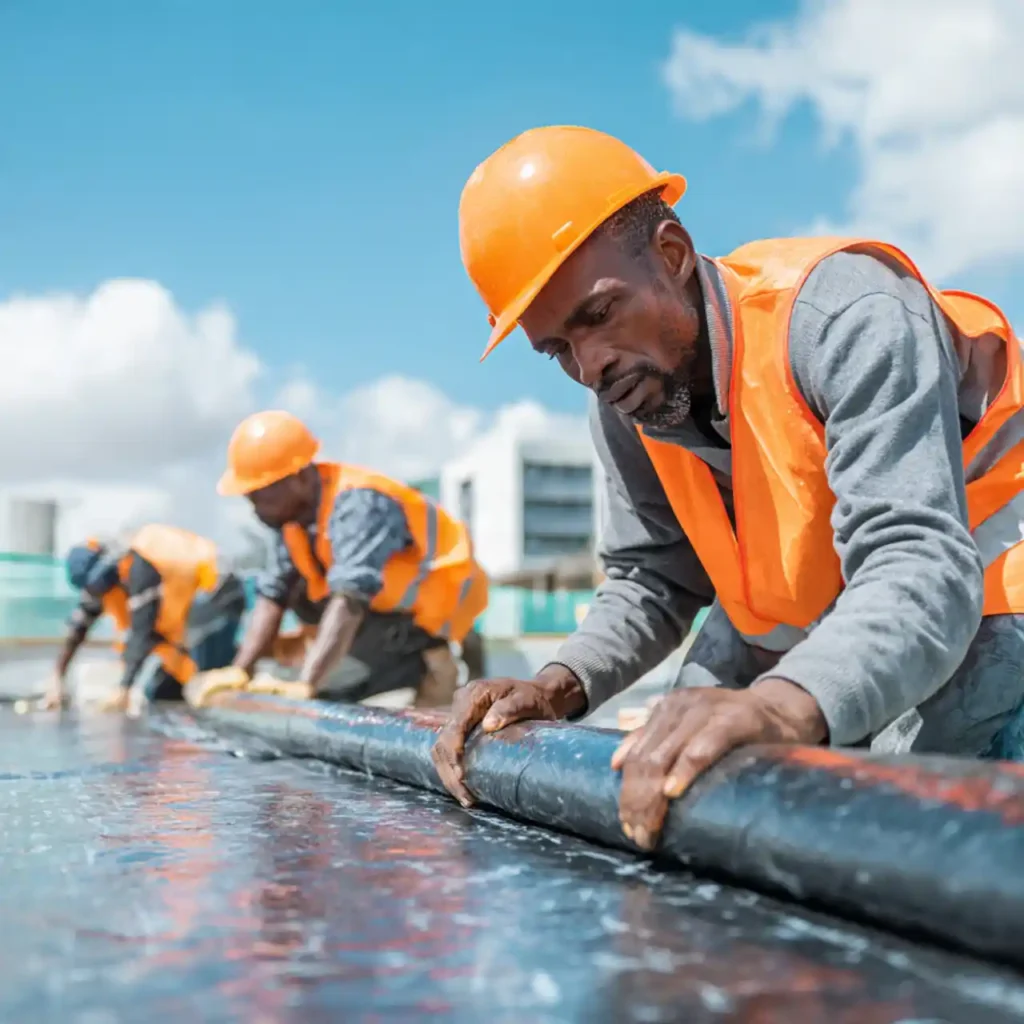
For flat concrete roofs, we prepare and reinforce the slab correctly before applying a membrane rated for both UV exposure and thermal movement. For pitched roofs with steel structures, we check that trusses and fasteners allow for expansion without loosening over time. Every waterproofing application includes a full inspection, since a membrane installed over an existing crack will fail again regardless of its quality. You can read more about our diagnosis-first approach on our waterproofing services page, or browse our blog for further guidance on protecting your property through Zimbabwe’s shifting seasons.
Protect Your Roof Before the Next Season Changes
Whether your property sits among the granite kopjes of Matopo, in the heart of Bulawayo, or further afield, the climate around it is actively working against your roof every single day. The good news is that damage caused by heat, UV, or sustained rainfall is predictable, and predictable damage can be prevented.
If your roof has not been inspected recently, now is the time. Contact Tusker Civils and Landscapes for a free, site-specific assessment, and let our team recommend a waterproofing and roofing approach built for the climate your property actually faces.
Latest Posts:
Waterproofing Myths Zimbabwean Homeowners Still Believe in 2026
“DIY Roof Repair in Zimbabwe: What Actually Works and What Just Delays a Bigger Bill”
How Load Shedding Is Secretly Damaging Your Roof and Gutters Without You Knowing