
Torch-On vs Liquid vs Bituminous Waterproofing Membranes: Which Is Best for Bulawayo Properties?
Choosing the right waterproofing membrane types can save Bulawayo property owners thousands of dollars in repair costs. Bulawayo’s climate is tough on flat roofs. Long dry spells bake the surface under intense UV rays. Then the summer rains arrive between November and March, testing every seam and joint. This combination is exactly why the right waterproofing membrane types matter so much here.
At Tusker Civils & Landscapes, we install torch-on, liquid-applied, and bituminous waterproofing systems across Bulawayo every month. Below, we break down each option so you can make an informed decision for your home or commercial building.
Why Waterproofing Membrane Types Matter in Bulawayo
Not every waterproofing membrane suits every surface. A flat concrete roof behaves differently to a basement wall. A balcony deck faces different pressures to a retaining wall. Consequently, the wrong membrane choice often leads to early failure, even when installation quality is good.
Bulawayo’s suburbs also present unique challenges. Older homes in areas like Hillside and Famona often have ageing roof structures. Meanwhile, newer developments demand modern systems that match current building standards. Either way, understanding your options first makes the conversation with your contractor far more productive.
Torch-On Waterproofing Membranes Explained
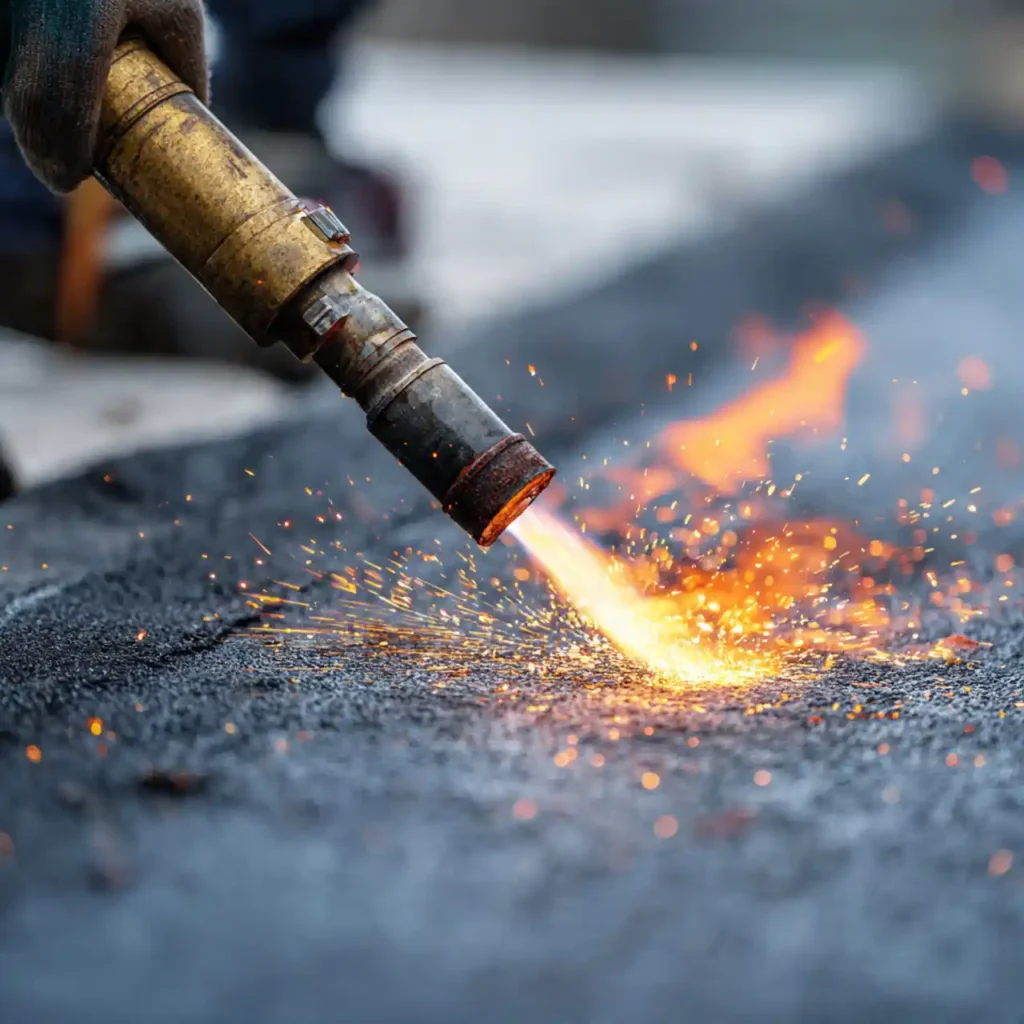
Torch-on waterproofing is one of the most trusted systems for Bulawayo’s flat roofs. It uses bitumen-modified polymer sheets. Installers heat these sheets with a gas torch, fusing them directly onto the roof surface. The result is a continuous, fully bonded waterproof layer.
How Torch-On Membranes Work
The heat melts the underside of the membrane. This creates a strong chemical bond with the substrate below. Overlapping sheets are similarly torched together, sealing every joint. Because of this fusion process, torch-on systems resist standing water exceptionally well.
Two main formulations exist. APP (Atactic Polypropylene) membranes handle high heat and intense UV exposure with ease. This makes them well suited to Bulawayo’s hot, sun-exposed rooftops. SBS (Styrene Butadiene Styrene) membranes, on the other hand, offer greater flexibility. Buildings prone to slight structural movement often benefit more from SBS systems, as explained on Sika’s bituminous membrane page.
Best Uses for Torch-On Systems in Bulawayo
Torch-on membranes perform best on flat concrete roofs, parapet walls, gutters, and trafficable surfaces. They also suit water-retaining structures and expansion joints. Under normal Bulawayo conditions, a correctly installed torch-on system lasts between ten and fifteen years. Our waterproofing services page covers the full range of surfaces we treat with this method.
Liquid-Applied Waterproofing Membranes
Liquid waterproofing takes a completely different approach. Instead of heat-fusing sheets, installers roll, brush, or spray a liquid coating directly onto the surface. As it cures, the coating forms a seamless, rubber-like membrane with no joints or overlaps.
How Liquid Membranes Perform
Because the coating flows into every corner and penetration, liquid systems adapt naturally to complex shapes. Parapet details, pipe penetrations, and irregular surfaces all become far easier to seal than with sheet membranes. Polyurethane and acrylic formulations dominate this category, and both offer excellent flexibility as temperatures shift throughout the day, as Sika’s liquid-applied membrane resource confirms.
Where Liquid Waterproofing Excels
Liquid membranes suit balconies, bathrooms, planter boxes, and roofs with tricky detailing. They also work well where a lighter installation process is preferable, since no open flame is involved. In Bulawayo, liquid-applied polyurethane and acrylic systems typically perform for five to ten years, depending on product specification and UV exposure. Property owners dealing with tight access or awkward roof geometry often find liquid systems the more practical choice.
Bituminous Waterproofing Options Beyond Torch-On
Torch-on membranes are one type of bituminous system, but bituminous waterproofing extends further. Self-adhesive bituminous sheets, for instance, bond to a surface without any heat at all. Installers simply peel back a release liner and press the membrane into place. This method suits sites where an open flame poses a safety risk.
Cementitious and crystalline waterproofing also fall within this broader category of structural protection. Crystalline treatments penetrate deep into concrete, reacting chemically with moisture to form insoluble crystals within the pores. This gives the treatment self-sealing properties that activate whenever water is present, even at hairline cracks that develop later. Basements, water tanks, swimming pools, and below-ground structures across Bulawayo benefit most from this technology, particularly where groundwater pressure is a factor. Our concrete construction team frequently coordinates directly with our waterproofing division on these structural projects.
Comparing Torch-On, Liquid, and Bituminous Membranes Side by Side
When you weigh these systems against each other, a few clear patterns emerge. Torch-on membranes generally offer the strongest resistance to foot traffic and mechanical damage, making them ideal for trafficable roofs and car parks. Liquid membranes, by contrast, win on detailing and awkward geometry, since there are no seams to fail. Crystalline and cementitious bituminous treatments lead the field for permanent, below-ground protection, particularly where hydrostatic pressure threatens a structure over decades.
Cost also varies across these systems. Torch-on is typically the more affordable upfront option for straightforward flat roofs. Liquid-applied systems can cost more per square metre, but they often reduce long-term maintenance because there are no joints to monitor. Meanwhile, crystalline waterproofing carries a higher initial specification cost, though its effectively permanent lifespan can offset that expense over the life of a building.
Choosing the Right Waterproofing Membrane for Your Bulawayo Property
Several factors should guide your final decision. First, consider the surface itself. A flat concrete roof with simple geometry suits torch-on well, whereas a balcony full of pipes and awkward corners often calls for liquid application. Second, think about foot traffic. Areas that see regular use need a membrane built to resist wear, not just water.
Third, factor in your budget and timeline. Torch-on installations are typically faster to complete, while liquid systems may need multiple coats and curing time between applications. Finally, consider your building’s exposure. Properties in suburbs like Burnside that face direct afternoon sun need membranes engineered for sustained UV resistance.
Because every property differs, a site visit remains the only reliable way to match the correct system to your specific challenge. Our team has spent sixteen years assessing Bulawayo properties, and that experience shapes every recommendation we make, as outlined on our About Us page.
Why Bulawayo’s Climate Makes Professional Installation Essential
Bulawayo’s weather pattern punishes poor workmanship quickly. Intense UV radiation degrades substandard materials within a season or two. Then, once the rainy months arrive, any weakness in the membrane becomes an active leak almost overnight. Professional surface preparation, correct primer selection, and proper detailing around penetrations all matter just as much as the membrane itself.
This is why DIY waterproofing so often fails within a year in Bulawayo. Skilled application, not just quality material, determines whether a system lasts a decade or barely survives one rainy season.
Get Expert Waterproofing Advice for Your Property
Whether your building needs torch-on, liquid-applied, or bituminous crystalline waterproofing, Tusker Civils & Landscapes can assess your property and recommend the right system. Our team has installed waterproofing across Bulawayo’s suburbs for sixteen years, backing every project with a written guarantee.
Reach out through our Contact Us page to book a free, no-obligation site inspection today.
Latest Posts:
Swimming Pool and Wet Area Waterproofing in Bulawayo: Preventing Leaks and Cracks
What a Leaking Roof Is Really Costing You: Mould, Wiring Damage, and Falling Property Value
From Matopo to Harare: How Zimbabwe’s Different Climates Destroy Roofs Differently