
Choosing the Right Materials and Methods
Water damage costs Bulawayo property owners thousands of dollars every rainy season. Yet many people still treat waterproofing in Bulawayo as a one-size-fits-all job. It isn’t. A shopping complex in the CBD faces completely different water pressure than a family home in Burnside. Therefore, the materials, timelines, and techniques must change too.
At Tusker Civils, we handle both ends of this spectrum daily. This guide breaks down exactly how commercial and residential waterproofing differ, so you know what to expect before you sign off on any project.
Why Property Type Changes the Waterproofing Approach
Every building moves water differently. So, before choosing a waterproofing system, a contractor must first understand how the structure itself behaves.
Building Scale and Structural Load
Commercial buildings are large. They often carry rooftop plant equipment, parking decks, and basement parking. Consequently, the waterproofing system must withstand heavier foot traffic, vehicle loads, and constant mechanical vibration.
Residential properties, on the other hand, rarely face this kind of stress. A home’s flat roof or bathroom floor deals with rainfall and everyday use, not industrial loads. As a result, lighter, more cost-effective systems usually do the job well.
Roof Design and Water Drainage
Most homes in Bulawayo use pitched roofs, which shed rainwater naturally. Commercial buildings, however, typically use flat or low-slope roofs to maximise usable floor space. Flat roofs pool water instead of shedding it. This means commercial waterproofing must resist standing water and hydrostatic pressure, while residential systems mainly guard against surface moisture and splash-back.
Materials Used in Commercial Waterproofing
Because commercial structures face heavier use, contractors reach for tougher, longer-lasting materials.
Torch-On and Sheet Membranes
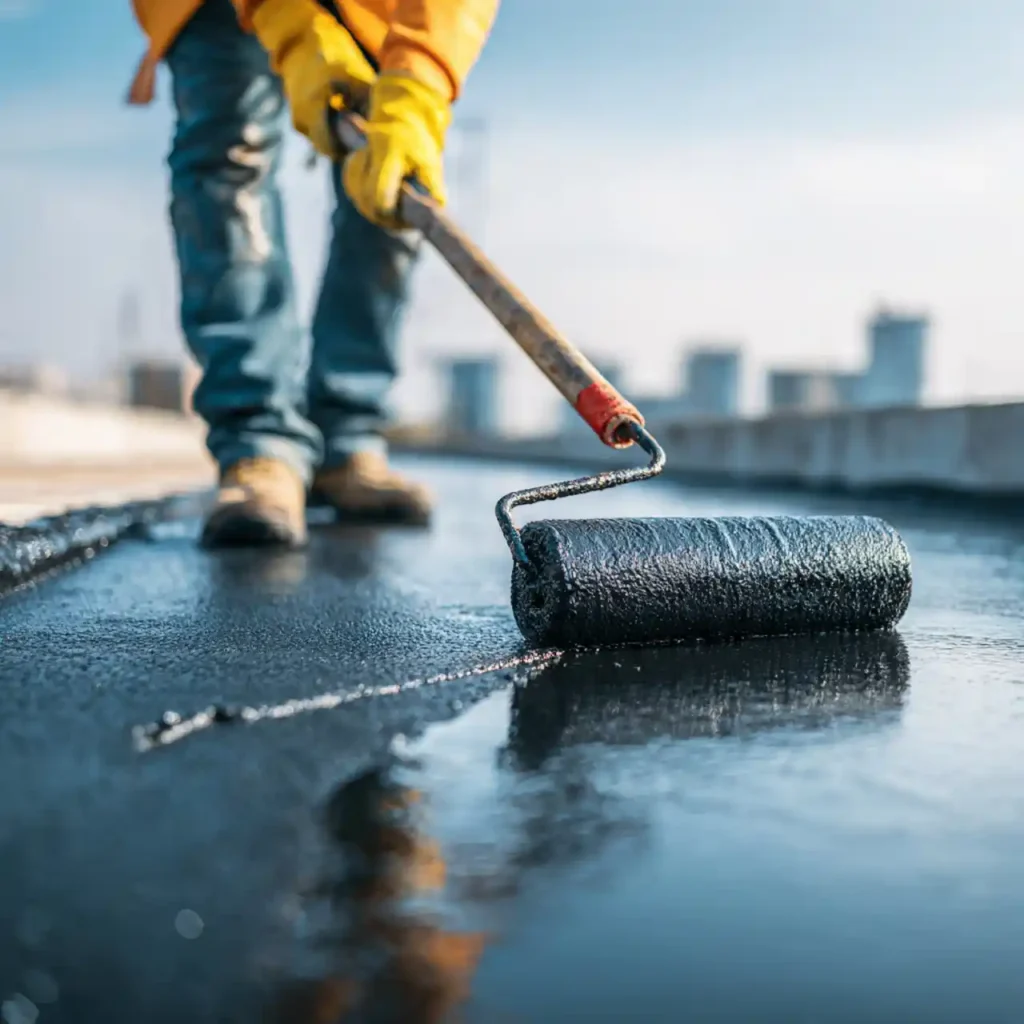
Torch-on bitumen membranes remain a favourite for flat commercial roofs. Installers heat-fuse them into a single, continuous barrier that resists ponding water for years. Sheet membranes made from PVC or modified bitumen offer similar strength, and they hold up well against foot traffic during maintenance work.
Polyurethane and PVC Coatings
Liquid-applied polyurethane coatings suit commercial basements, parking decks, and podium slabs. They stretch and flex without cracking, which matters on large structures that expand and contract with temperature swings. Our team applies these systems as part of our full waterproofing services in Bulawayo, matching the coating to each building’s specific exposure and traffic pattern.
Materials Used in Residential Waterproofing
Homes need protection too, but the demands are gentler. So the material choice shifts toward affordability and ease of repair.
Cementitious and Acrylic Coatings
Cementitious waterproofing works well on bathroom floors, water tanks, and small flat-roof sections. It bonds directly to concrete surfaces and resists moisture without adding significant cost. Acrylic coatings are another popular residential option, since they apply quickly and cure fast, which keeps disruption to a household minimal.
Damp-Proofing at Foundation Level
Rising damp is a common problem in older Bulawayo homes. Unlike full waterproofing, damp-proofing targets moisture vapour at foundation and wall level rather than standing water. A correctly installed chemical damp-proof course can last two to three decades, protecting plaster and paint finishes from that telltale tide mark along the base of a wall.
How the Application Process Differs
Materials matter, but the process around them matters just as much. Commercial and residential jobs move at very different paces.
Commercial projects usually run on tight construction schedules and strict compliance requirements. Insurers and building managers often demand documented warranties, product data sheets, and inspection sign-offs before work even begins. Because commercial roofs and basements are large, crews also work in phases, so that parts of the building stay operational during application.
Residential projects move faster and more informally. A typical home waterproofing job, whether it’s a bathroom, a flat roof section, or a boundary wall, wraps up within a few days. Homeowners still deserve a clear scope of work and a written guarantee, though. That’s why every quote from Tusker Civils spells out the materials, the timeline, and the expected lifespan before we start.
Common Waterproofing Failures We See in Bulawayo
Regardless of property type, most failures trace back to the same root causes: poor surface preparation, skipped primer coats, or membranes applied in the wrong weather conditions. Bulawayo’s intense summer heat followed by concentrated rainy-season downpours puts real stress on any waterproofing system that wasn’t installed correctly the first time.
Commercial buildings tend to reveal problems through ceiling stains near rooftop plant rooms or damp patches in basement parking. Homes more often show cracked plaster, peeling paint, or a musty smell in bathrooms. Either way, catching these signs early saves money down the line. Industry research on membrane performance confirms this pattern. A flat commercial roof generally suits a robust single-ply membrane, while a home with a more complex roof shape often performs better with a flexible system built for tighter details. Matching the membrane to the building type extends its working life considerably.
Choosing the Right Waterproofing Partner in Bulawayo
Whether you manage a commercial property or you’re protecting your family home, the underlying goal stays the same: keep water out and structure intact. However, getting there requires different materials, different labour, and different quality checks depending on which side of that line your property sits.
Tusker Civils & Landscapes has spent 16 years solving both types of problems across Bulawayo. Our crews assess pitch, drainage, traffic load, and existing damage before recommending a system, rather than applying a generic solution to every roof or basement we see. You can learn more about our background and approach on our About page, or browse related guides on our blog for deeper dives into roof leaks, damp diagnosis, and seasonal maintenance.
Ready to get your property assessed? Contact Tusker Civils today for a free, no-obligation waterproofing inspection tailored to your building, whether it’s a family home in Hillside or a commercial development in the CBD.
Latest Posts:
Basement and Foundation Waterproofing Solutions for Bulawayo Properties
Swimming Pool and Wet Area Waterproofing in Bulawayo: Preventing Leaks and Cracks