
Shock Pads for Safer Playgrounds in Bulawayo: What You Need to Know
Playgrounds bring energy and laughter to any property. However, most falls happen at ground level, not from the equipment itself. That is where shock pads come in. A shock pad is a cushioning layer installed beneath a playground surface, and it absorbs the impact of a fall before it reaches a child’s head or body. In Bulawayo, where schools, estates, and recreational centres are investing in safer outdoor spaces, shock pads have become an essential part of responsible playground design.
At Tusker Civils & Landscapes, we install playground surfacing across Bulawayo, and we see the same question again and again: what actually makes a play area safe? This guide walks you through what shock pads are, why they matter, and how to choose the right system for your site.
What Are Shock Pads and Why Do Playgrounds Need Them
A shock pad sits underneath the visible surface of a playground, whether that surface is artificial grass, rubber tiles, or a poured rubber finish. Its job is simple: it slows down the speed at which a falling body hits the ground, and it spreads that impact over a wider area.
Falls remain the leading cause of injury on public play equipment. The United States Consumer Product Safety Commission’s Public Playground Safety Handbook reports that most injuries on public playgrounds result directly from falls to the surface below. Consequently, the surfacing choice matters just as much as the equipment itself.
European testing standard EN 1177 formalises this further. According to the BSI Group’s guidance on impact attenuating playground surfacing, every surface has a “critical fall height,” which is the maximum height a child can fall from without a serious head injury. Once you know the height of your equipment, you can match it to a shock pad that keeps children safe within that limit.
The Real Risk of Falls on Bulawayo Playgrounds
Bulawayo’s climate and soil conditions add another layer to this conversation. Hard-packed clay, compacted earth, and bare ground harden further during the dry season, which removes any natural cushioning underfoot. Meanwhile, concrete and asphalt surfaces offer no shock absorption at all, so they should never sit directly beneath climbing frames, slides, or swings.
Schools and estates across the city often inherit play areas built years ago, long before surfacing standards became common practice. As a result, many existing playgrounds still sit on plain grass, sand, or paving. These materials feel adequate at first glance, yet they compact over time and lose whatever cushioning they once provided. A proper shock pad solves this problem permanently, because it does not compress, erode, or wash away the way loose soil does.
Types of Shock Pad and Playground Surfacing Options
Not every playground needs the same solution. The right system depends on your budget, your equipment height, and how much foot traffic the area receives.
Rubber Shock Pads and Wet-Pour Surfacing
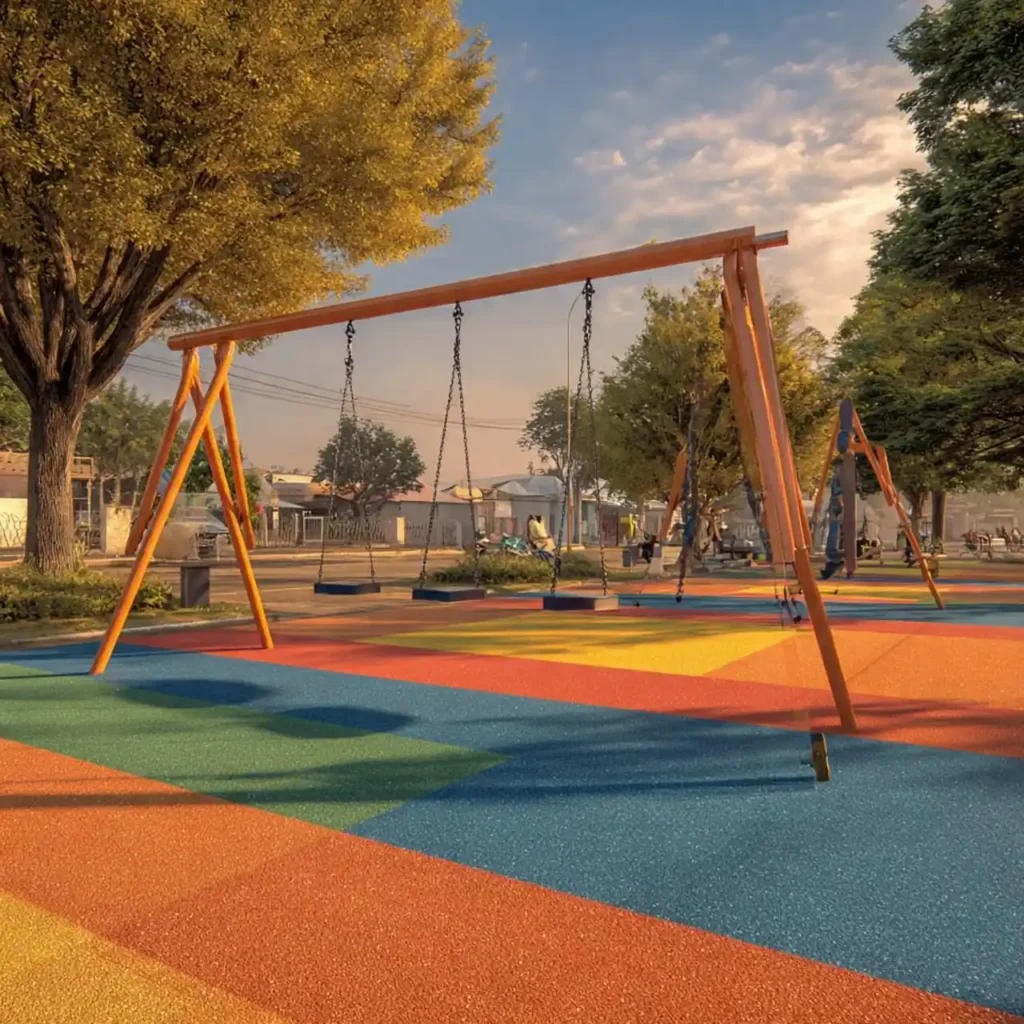
Rubber shock pads are manufactured rubber sheets or poured-in-place systems that sit on a prepared base. They offer consistent, tested impact attenuation and hold their shape for years, which makes them the preferred choice for schools and public play areas with high daily use.
Shock Pads Under Artificial Grass
Many of our Bulawayo clients now pair a rubber shock pad with artificial grass on top. This combination gives you the soft, natural look of a lawn while still delivering the impact protection that bare turf cannot provide on its own. It also means the play area stays green and usable throughout the dry season, since it needs no watering to maintain its appearance.
Loose-Fill Alternatives
Sand, wood chips, and pea gravel offer a lower-cost starting point for smaller residential play areas. However, they need regular top-ups and raking, because children and rain both push the material away from where it is needed most. For estates and schools that want a lasting, low-maintenance solution, a bonded shock pad remains the stronger long-term investment.
How Tusker Civils & Landscapes Installs Shock Pads in Bulawayo
Installation quality determines how well a shock pad performs, so we treat every stage of the process with the same care we bring to our civil construction projects.
Site Preparation and Base Work
We begin by clearing the area and compacting a stable sub-base, which prevents future sinking or unevenness. This step mirrors the ground preparation we use for our paving projects, because a play surface is only as reliable as the foundation beneath it.
Drainage and Irrigation Considerations
Standing water beneath a shock pad weakens the base over time and shortens the surface’s lifespan. Our team designs drainage into every playground project, and where a site also includes surrounding lawns or garden beds, we can integrate the work with our irrigation systems so the whole property drains and waters correctly.
Choosing the Right Shock Pad Thickness for Your Playground
Thickness is not a guessing game. It depends directly on the fall height of your tallest piece of equipment. A low toddler slide needs far less cushioning than a climbing frame with a two-metre platform. Our team measures every structure on site, then recommends a shock pad depth that keeps the critical fall height within a safe range for that specific piece of equipment.
Skipping this step is one of the most common mistakes we see. A shock pad that works well under a swing set may fall short beneath a taller jungle gym. Getting the specification right from the start avoids costly rework later and, more importantly, keeps children genuinely protected.
Maintaining Shock Pads for Long-Term Safety
A shock pad is not an install-and-forget product. Rubber surfaces should be checked periodically for tears, shifting, or gaps at the edges, since these weak points reduce the surface’s protective performance. Loose-fill materials need regular raking and topping up to maintain their depth, particularly after heavy rain washes material toward drainage points.
We recommend a simple seasonal check: walk the play area, look for bare or thin patches, and confirm that joints between panels remain sealed. Catching a small issue early is always cheaper and safer than replacing an entire surface later.
Build a Safer Playground With Tusker Civils & Landscapes
Shock pads turn a good-looking playground into a genuinely safe one. Whether you are planning a new play area for a school, an estate, or a family garden in Bulawayo, getting the surfacing right protects every child who uses it.
Tusker Civils & Landscapes brings civil construction expertise and landscaping know-how together on every playground project we take on. If you are ready to discuss a shock pad installation for your property, get in touch with our team for a free site assessment and quote.
Recent Posts:
How Much Does Artificial Grass for a Tennis Court Cost in Bulawayo?
Artificial Grass vs Natural Grass for Bulawayo Rugby Fields: Which Wins?
Why Artificial Grass Is the Safer Choice for Bulawayo Playgrounds