
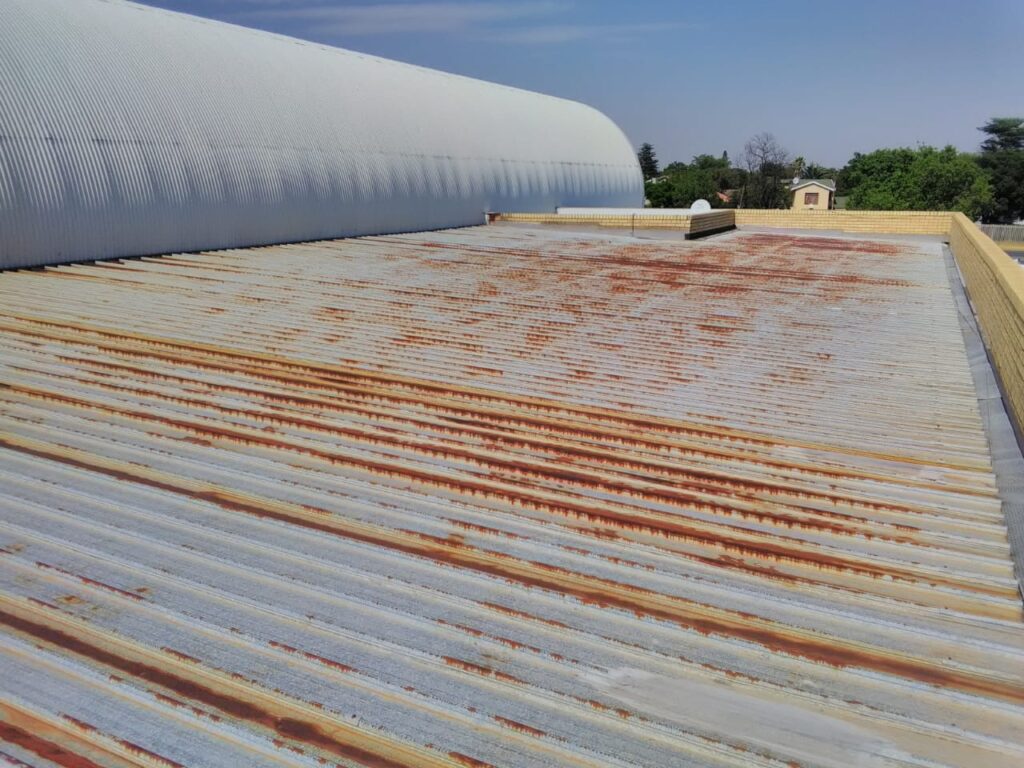
Metal Roof Waterproofing in Zimbabwe
Metal roofs cover most homes, schools, shops and warehouses in Zimbabwe. They are affordable, quick to install and strong enough for our climate. However, every metal roof eventually leaks if nobody protects it. Screws loosen, sheets rust and overlaps open up under years of heat and storms. As a result, water finds its way into ceilings, walls and stock. That is why metal roof waterproofing in Zimbabwe is not a luxury. Instead, it is basic maintenance that protects the most expensive part of your building.
This guide explains everything a property owner needs to know. First, we cover why metal roofs leak and which profiles are most common locally. Next, we compare the waterproofing systems that actually work on steel sheeting. We also walk through how a professional job is done, step by step. Finally, we look at timing, cost factors and maintenance. Whether you own a house in Bulawayo, a shop in Gweru or a warehouse in Harare, this guide will help you make a confident decision. At Tusker Civils and Landscapes, we waterproof metal roofs across Zimbabwe every week. So everything here comes from real projects, not theory.
Why Metal Roofs Leak in Zimbabwe
Most metal roof leaks start at small details rather than in the middle of a sheet. The biggest culprit is the fixing point. Every screw or nail punches a hole through the sheet. Over time, the rubber washer under the screw head dries out and cracks in the sun. Meanwhile, the sheet expands in the afternoon heat and contracts at night. This daily movement slowly widens each hole until rain seeps through. Loose fixings also weaken the roof in strong winds. After a storm tore roofs off houses in Sizinda and Richmond, Bulawayo’s acting chief fire officer advised residents to check their roof nails regularly.
Overlaps are the second common leak point. Where two sheets meet, wind can drive rain sideways into the joint. Low roof pitches make this worse, because water moves slowly and pools at the laps. Flashings come next. Ridge caps, valley gutters and wall flashings often lift, rust or lose their sealant. In addition, open gaps at the eaves and ridge let in wind-driven rain, dust and birds. Profiled foam fillers such as IBR polyethylene closures are designed to seal those gaps, yet many local roofs never had them fitted. Finally, rust eats through older galvanised sheets, especially where water and debris collect. Therefore, a lasting fix must treat every one of these weak points, not just the visible drip.
Common Metal Roof Profiles in Zimbabwe
Zimbabwean buildings mainly use three metal roof types. Each one needs a slightly different waterproofing approach. Corrugated iron is the oldest and most widespread profile, with its familiar rounded S-shaped ribs. Many older homes in high-density suburbs still have galvanised corrugated sheets. These roofs usually suffer from rusted laps and loose nails. IBR, or inverted box rib, has square flutes that make it stiffer and better at carrying water. You will find IBR on newer homes, shops, schools and warehouses. Suppliers such as Clotan Steel describe IBR as a square-fluted profile widely used on homes and industrial buildings. Chromadek and other pre-painted sheets come in colours and resist corrosion better. Even so, their screws, laps and flashings still fail over time.
The roof pitch also matters a great deal. Technical guidance for IBR sets a minimum pitch of 5° to 7.5°, depending on the slope length. Many Zimbabwean roofs, particularly on extensions and carports, are built flatter than that. Consequently, water ponds on these roofs and creeps back under the laps. A good contractor checks the profile and pitch before recommending any product. For example, a flat IBR roof may need a fully reinforced membrane. By contrast, a steep corrugated roof may only need its fixings and laps sealed.
Waterproofing Systems That Work on Metal Roofs
The right system depends on the roof’s condition, pitch and budget. Liquid-applied systems are the most popular choice for metal roofs. These are brushed or sprayed on and cure into a seamless, flexible skin. Bitumen emulsions and acrylic waterproofers are the two main families. For instance, a.b.e. Construction Chemicals lists liquid systems for sealing roof bolts, flashings, laps and small flat roofs. These coatings are usually reinforced with a polyester membrane over joints, screws and flashings. The membrane gives the coating strength exactly where the roof moves most.
Acrylic fibre-reinforced coatings are another strong option. They reflect heat, stay flexible and can be overpainted in a matching colour. However, preparation is critical on steel. Sika’s guidance for its Sealoflex system says steel surfaces need a good metal primer before waterproofing. Skipping the primer is one of the most common reasons coatings peel off within a year. Self-adhesive bitumen flashing tapes are useful for quick repairs at laps, ridges and gutters. Torch-on membranes, on the other hand, rarely suit pitched metal roofs. The heat can damage sheet coatings, and the heavy felt struggles to follow the ribs. In practice, most lasting results come from a reinforced liquid system over properly primed steel. We also recommend a reflective silver or light-coloured topcoat to cut heat and protect the waterproofing from UV.
How Professional Metal Roof Waterproofing Is Done
A proper job always starts with an inspection. Our team walks the roof and checks every sheet, lap, fixing and flashing. We also look inside the ceiling for stains, wet insulation and rotten timber. This tells us where water actually enters, which is often far from where it drips. Next, we replace any sheets that have rusted through. Coating over holes only hides the problem for a few months. After that, we tighten or replace loose screws and fit new washers where needed.
Surface preparation follows. The roof is pressure-washed to remove dust, bird droppings, moss and flaking paint. Loose rust is wire-brushed, and the steel is left to dry fully. Then a rust-inhibiting metal primer goes on, especially over bare or rusted areas. Once the primer cures, we seal all screw heads, laps, ridge caps and flashings with coating and reinforcing membrane. These details receive the most attention because they cause most leaks. Finally, the full roof surface gets two or more coats of waterproofing. Each coat must dry before the next goes on. We then finish with a reflective topcoat if the client wants extra heat protection. Before handover, we water-test critical areas and clear all gutters and downpipes. A good contractor will also give you photos of each stage. That record proves the work was done properly and supports any guarantee.
When Is the Best Time to Waterproof a Metal Roof?
The best time is during the dry months, well before the first storms. Most coatings need dry steel and several rain-free hours to cure. In Zimbabwe, that means planning work between May and early October. Once the rains arrive, contractors get booked up and wet days cause delays. Some owners assume a dry season means they can skip maintenance. That is a risky bet. Regional forecasters warn that Zimbabwe faces a higher chance of below-normal rainfall during the October 2026 to March 2027 season. Yet drier seasons still bring violent thunderstorms.
In fact, short and intense storms often do the most damage to metal roofs. The Meteorological Services Department has previously warned of violent thunderstorms with strong winds and possible hail during heavy rainfall spells. Hail dents sheets and cracks coatings, while gusts lift poorly fixed sheets. A hotter summer also means more heat stress on washers and sealants. Therefore, a roof that survived last year is not guaranteed to survive this one. If your roof has not been checked since the last rains, book an inspection now. Even a small repair before a big storm costs far less than replacing ceilings, furniture or stock.
What Affects the Cost of Metal Roof Waterproofing in Zimbabwe?
No honest contractor can quote a fixed price without seeing the roof. Still, a few factors drive the final figure. Roof size comes first, since most quotes are calculated per square metre. However, condition matters just as much. A sound Chromadek roof that only needs its fixings sealed costs far less than a rusted corrugated roof. Rusted roofs need sheet replacement, rust treatment and extra primer before any waterproofing goes on.
The chosen system also changes the price. A detail-only treatment of screws, laps and flashings is the most affordable option. A full-surface reinforced coating costs more but protects the whole roof. Adding a reflective topcoat increases the cost slightly, yet it often pays back through cooler rooms. Access is another factor. Steep roofs, double storeys and roofs over busy shops need more safety equipment and labour. Location affects transport and travel time too. Finally, the product brand and the length of guarantee influence the quote. Cheap quotes often skip priming or use one thin coat. As a result, the roof leaks again within a season. Always compare quotes on the full specification, not the bottom line alone. At Tusker, we provide a written breakdown so you can see exactly what you are paying for.
How Long Does Metal Roof Waterproofing Last?
A well-applied reinforced coating usually lasts several years before it needs a refresh. The exact lifespan depends on product quality, film thickness and sun exposure. Maintenance makes the biggest difference of all. We recommend a roof inspection once a year, ideally just before the rains. During that visit, we check fixings, clear gutters and touch up any worn areas. Small repairs at this stage keep the full system working for much longer.
You can also help between inspections. Keep overhanging branches trimmed so they do not scratch the coating. Clear leaves and debris from gutters and valleys after windy days. In addition, avoid walking on the roof unless necessary, because foot traffic cracks coatings. If you notice a ceiling stain after a storm, call your contractor quickly. A fast response stops water from spreading into timber, insulation and electrics. Over time, regular care can extend the life of the roof sheets themselves. That is far cheaper than a full re-roof.
Get Expert Metal Roof Waterproofing Across Zimbabwe
A leaking metal roof never fixes itself. Every storm makes the damage worse and the repair more expensive. Tusker Civils and Landscapes provides professional metal roof waterproofing for homes, schools, churches, shops and warehouses. We work from our Bulawayo office and travel to projects across Zimbabwe. Every job includes a full inspection, proper surface preparation and a written quote. We also photograph each stage, so you know exactly what was done on your roof.
Don’t wait for the next storm to find your weak spots. Call or WhatsApp us on 078 095 8746, or email build@tuskercivils.com. We will assess your roof and recommend the right system for your building and budget.
Related Posts:
- What to know about El Niño and Roof Leaks in Zimbabwe in 2026/27
- What are the causes of flat roof leaks in Zimbabwe?
- Silver Coat Protection Paint for Metal Roofs in Zimbabwe: A Complete Guide
- Why Metal Roof Waterproofing by Coating Is a Bad Idea.
- How Not to Waterproof a Metal Roof in Bulawayo: Warnings to Homeowners