
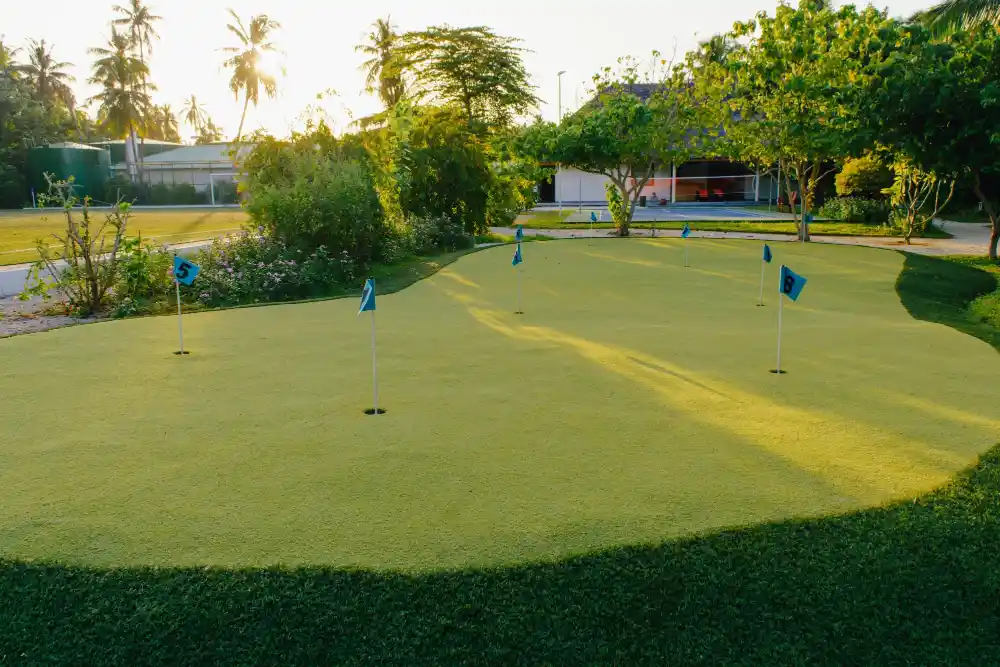
How to Maintain Artificial Turf on Busy Golf Greens in Bulawayo
Golf clubs across Bulawayo face a familiar problem. Natural greens struggle under constant foot traffic, seasonal water shortages, and Zimbabwe’s harsh dry-season sun. As a result, many clubs now turn to artificial turf golf greens as a durable, low-water alternative. However, a synthetic green only performs well if you maintain it correctly. This guide walks through what proper artificial turf maintenance looks like on a busy Bulawayo course, and why the right care plan protects both playability and your investment.
Why Bulawayo Golf Clubs Are Switching to Artificial Turf
Water restrictions hit Bulawayo hard every dry season. Natural grass greens need daily irrigation to stay playable, and that cost adds up fast for clubs already managing tight budgets. Artificial turf removes that pressure entirely. It also holds its shape under heavy play, so members get a consistent roll no matter how many rounds pass through in a week.
Beyond water savings, synthetic greens cut down on mowing, fertilising, and pest control. For a club that hosts tournaments, corporate days, and daily member rounds, that consistency matters. Tusker Civils & Landscapes installs artificial grass in Bulawayo built specifically for demanding, high-use surfaces like golf greens.
The Real Challenge: High-Traffic Wear
Foot traffic is the single biggest threat to any synthetic green. Every step, every dragged flagstick, and every practice session flattens the fibres a little more. Over time, flattened fibres change how the ball rolls, and that undermines the entire point of installing turf in the first place.
High-traffic zones also collect more dust and grit than the rest of the course. Bulawayo’s dry months blow fine red dust across open fairways, and that dust settles deep into turf fibres near cups and approach areas. Left unmanaged, it compacts the infill and slows the surface down. So, a maintenance plan built around traffic patterns, not just a fixed weekly schedule, produces far better long-term results.
Building a Maintenance Routine That Actually Works
A strong maintenance routine rests on three habits: brushing, infill management, and prompt debris removal. Each one addresses a different type of wear, and together they keep a green playing true for years.
Brushing Against the Grain
Brushing is the single most effective task on this list. Using a stiff-bristle broom or a mechanical groomer, staff should brush against the direction the fibres lean. This lifts flattened blades back into position and redistributes infill evenly across the surface. According to the Synthetic Turf Council, regular grooming directly extends the working life of any synthetic system, since it prevents permanent matting before it sets in.
High-traffic cups, walk-on points, and practice greens need brushing more often than quieter parts of the course. A twice-weekly pass on those zones, alongside a lighter weekly brush elsewhere, keeps wear even across the whole green.
Managing Infill Levels
Infill gives the turf its cushioning and helps control ball speed. However, infill migrates over time, especially in areas with heavy foot traffic or strong wind. Low spots develop near cups and along common walking lines, and that unevenness throws off putts in ways members notice immediately.
Checking infill depth monthly, and topping it up where needed, keeps the roll consistent from one side of the green to the other. AstroTurf’s maintenance guide recommends pairing infill top-ups with decompaction work, since compacted infill behaves differently underfoot than freshly redistributed material.
Removing Debris and Treating Stains
Leaves, seed pods, and dust accumulate quickly on an open course. Left in place, organic debris breaks down and stains the fibres, which then attracts more dirt and holds moisture against the backing. A daily blow-down with a leaf blower, followed by a quick visual check for stains, prevents most of this buildup before it becomes a problem.
Stubborn marks, such as fertiliser overspray from neighbouring fairways or oil from maintenance equipment, respond best to a mild, turf-safe cleaner rather than harsh chemicals. Harsh products can damage the fibre coating and shorten the turf’s lifespan.
Bulawayo’s Climate Adds Its Own Pressures
Bulawayo’s dry season brings intense UV exposure, and that sun gradually breaks down unprotected synthetic fibres. Quality turf products include UV stabilisers to slow this process, but even stabilised turf benefits from shade breaks or a protective spray during peak summer months.
The rainy season introduces a different challenge. Heavy downpours test drainage, and any green with poor base preparation will pool water after a storm. That standing water softens the base over time and shortens the system’s lifespan. Good drainage starts at installation, which is why base preparation matters as much as the turf itself. Pairing a green with a properly designed irrigation and drainage system helps manage runoff from surrounding fairways and keeps the green firm through the wet months.
When to Bring In Professional Maintenance
Daily brushing and debris removal can happen in-house, but certain tasks need specialist attention. Deep decompaction, seam inspection, and full infill redistribution require equipment most clubs don’t keep on-site. Scheduling a professional service visit every few months catches problems early, before they turn into costly repairs.
A professional inspection also checks for seam separation and backing wear, both of which are easy to miss during routine brushing. Catching these issues early protects the club’s investment and avoids a full resurfacing project down the line.
Choosing the Right Installer From the Start
Maintenance only works if the underlying installation is solid. A poorly compacted base, weak seams, or the wrong pile height for golf use will fight every maintenance effort you make afterward. That’s why the installation partner matters just as much as the maintenance schedule that follows.
Tusker Civils & Landscapes works with clubs, schools, and estates across Bulawayo, building golf-grade synthetic surfaces designed for exactly this kind of demanding use. The team also supplies related landscaping work, including instant lawns for surrounding fairways and paving for cart paths and walkways, so a course gets one contractor managing the full picture. You can read more about the company’s approach on the About page, or browse further guides on the blog.
Final Thoughts
A well-maintained artificial green rewards a golf club with consistent play, lower water bills, and fewer disruptions across the season. The routine isn’t complicated: brush against the grain, manage infill, clear debris promptly, and bring in professional support for the deeper work. Get that rhythm right, and a Bulawayo course keeps its greens playing true through every season the city throws at it.
If your club is planning a new synthetic green or needs a maintenance plan for an existing one, get in touch with Tusker Civils & Landscapes for a site assessment.
Recent Posts:
5 Reasons Bulawayo Schools Are Switching to Artificial Grass Hockey Fields
All About Shock Pads: Keeping Bulawayo Playgrounds Fall-Safe
How Much Does Artificial Grass for a Tennis Court Cost in Bulawayo?