
Why Metal Roof Waterproofing by Coating Is a Bad Idea
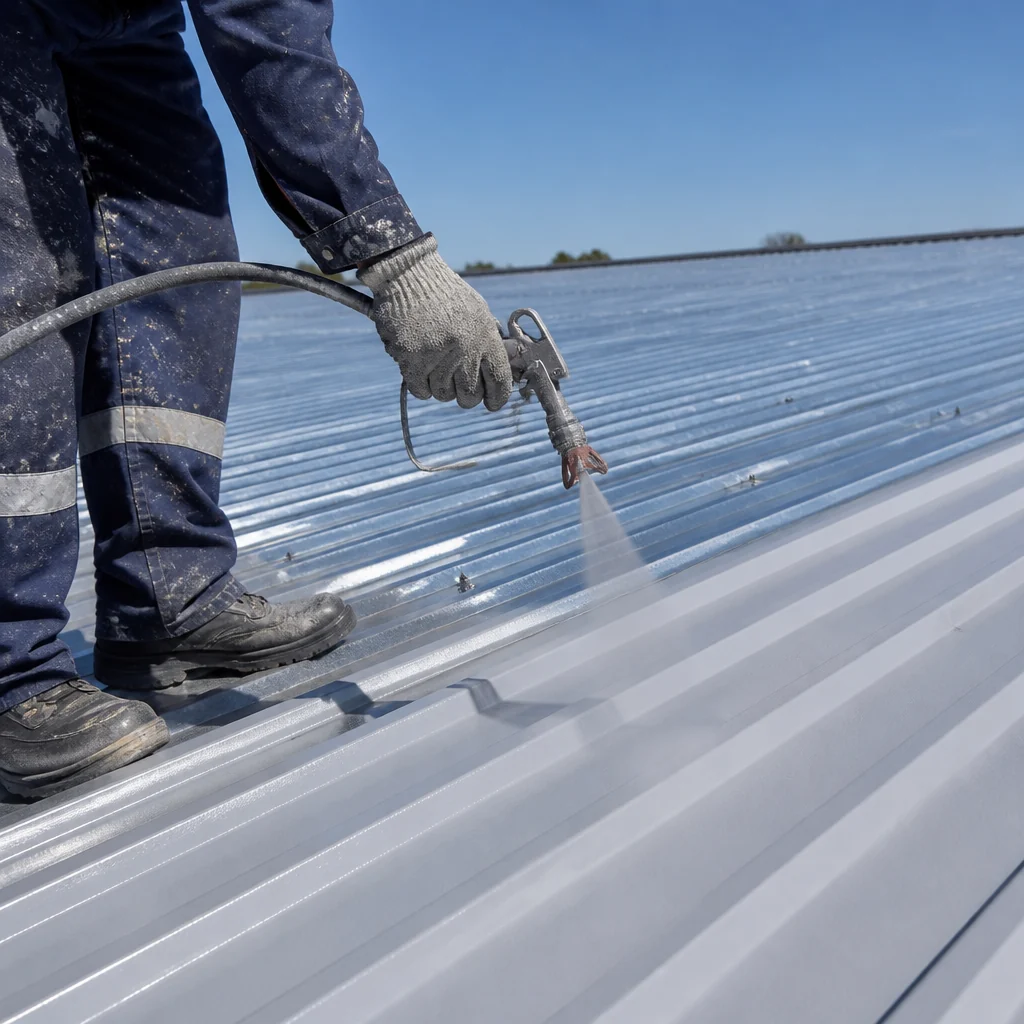
Metal roof waterproofing by coating sounds like the perfect fix. Roll on a liquid membrane, stop the leak and skip the cost of new sheeting. Unfortunately, reality is often very different. Roofing experts in South Africa, Zimbabwe and the United States report the same pattern. Coatings crack, peel and trap moisture, and then the leak returns. In this article, Tusker Civils and Landscapes explains why coating a metal roof is often a poor decision. We also show what works better.
Why Property Owners Choose Coatings in the First Place
Coatings are popular for good reasons. They cost less upfront than new sheeting, and application is fast. There is no demolition, and the building stays in use. Suppliers also promise long guarantees, which sounds reassuring. A quality system can help in the right conditions. Metal Construction News reports that a good coating system can extend a metal roof’s life and usually costs a fraction of replacement. However, the same article stresses that results depend on strict conditions. Those conditions are hard to meet on real roofs, especially older ones. That gap between the sales pitch and site reality is where most problems begin.
Coatings Do Not Move With Your Metal Roof
Metal expands and contracts every day. On a hot afternoon in Gauteng or Bulawayo, sheets heat up fast. At night, they cool sharply. This constant movement stresses every seam, overlap and fastener. A truly flexible membrane might cope, but many coatings are not flexible enough. One roofing trade article on leaking metal roofs says coatings give very little with the movement of the metal, so cracks form at joints and seal areas.
Once a crack forms, water gets under the film. It then travels along the sheet and out of sight. The coating hides the leak path instead of fixing it. Repeated heat cycles also widen every small crack over time. The same article adds that recoating a roof every five years is not unusual, which gets expensive quickly. Therefore, the “permanent” fix often becomes a recurring maintenance bill.
Poor Adhesion Is the Biggest Risk
A coating is only as good as its bond to the metal. Old roofs carry dirt, chalky residue, rust, previous paint and sometimes bitumen. Each of these can stop a new coating from sticking. Metal Construction News explains that long-term performance depends on how tightly the coating bonds to the roof, and weak bonding can lead to cracking, blistering or peeling. Misidentifying the existing coating causes the same trouble.
This is a well-documented problem. The US government’s National Institute of Standards and Technology published a study of metal roofing coatings. Its contents list peeling, cracking and adhesion failure of maintenance coatings applied over existing factory finishes. Perfect preparation means testing, cleaning and priming every section. On a large roof, that takes time and money, so many contractors rush it. The result is a coating that looks excellent for a season and then lifts in sheets.
Leaks Usually Start at the Fasteners, Not the Sheet
Many owners coat the whole roof when only the details are failing. Metal Construction News notes that leaks and rust nearly always begin at the fasteners. Screws loosen as sheets move, rubber washers perish and holes enlarge. Flashings around chimneys, vents and walls also fail. A coating over a failing fastener is a thin skin over a permanent problem. Water simply finds its way back in around the screw.
Building rules point to the same details. South Africa’s National Building Regulations deem roofs compliant when they meet SANS 10400-L, according to Regulation L3. A roofing quality guide from SAPVIA summarises that standard as requiring roofs to prevent water penetration, with pipes and chimneys sealed using proper flashing. A coating does not replace correct flashing, drainage or fixing. Waterproofing a roof means solving the water path, not painting over it.
Coatings Can Trap Moisture and Speed Up Corrosion
Any pinhole, blister or missed spot lets water behind the film. That trapped water cannot evaporate, so rust develops under the coating. Roofing site Roofers Coffee Shop warns that imperfections in a coating can trap moisture against the metal and accelerate corrosion. Condensation on the underside of the sheet adds to the problem. In many roofs, screw holes rust first, and the damage spreads from there.
Homeowners in South Africa have noticed this too. In one IBR roof discussion on a South African forum, a contributor says coating a rusted sheet probably just delays the inevitable. Rust beneath a fresh coating stays hidden until the sheet is weak. By then, replacement is harder and walking on the roof is dangerous. Consequently, the cheap fix can end up costing more.
The True Cost, Warranties and Lifespan
Coating is cheaper upfront, but not always cheaper overall. Roofers Coffee Shop states that a recoat costs between 25% and 70% of a new roof, and coating can void existing warranties. That claim comes from a roofing contractor, so check it against local quotes. Even so, the logic holds. Add repeat coatings every few years, and the saving shrinks.
Warranties matter too. Factory-painted sheets such as ZincAL and Chromadek usually carry manufacturer guarantees. Painting over them without approval may put that cover at risk. Always ask your sheet supplier before coating. Also remember that SAPVIA’s guide lists SANS 10243 as the standard for corrosion-resistant metal sheeting. A cheap coating does not make a corroded sheet compliant again.
When a Coating Might Still Make Sense
Coatings are not always wrong, and honest advice should say so. A coating may work on a roof with sound sheets, minimal rust and tight fasteners. It also needs a clean surface and a system chosen for that specific metal. Adhesion tests should come first. Even then, treat the coating as maintenance, not as a cure for leaks. It will not rescue a roof with widespread rust, failing seams or leaking flashings. If your roof is already leaking in many places, coating is the wrong starting point.
Better Alternatives to Coating a Leaking Metal Roof
Fix the cause of the leak first. Replace failed fasteners with correct screws and sealing washers. Reseal side and end laps with suitable sealant or tape. Renew flashings around penetrations, walls and valleys. Clear gutters so water does not pond or back up under the sheets. Replace badly rusted sheets one by one instead of coating them.
Sometimes the roof is simply at the end of its life. METALCON notes that widespread coating failure often signals that a roof is nearing the end of its useful life. In that case, new sheeting in the correct profile, with proper fixing and flashing, is the sound investment. The earlier trade article agrees that replacement is often the more economical choice. Replacement also gives you a fresh manufacturer warranty.
Get an Honest Roof Assessment from Tusker Civils and Landscapes
Tusker Civils and Landscapes serves clients in Gauteng, Mpumalanga and Bulawayo. We inspect your roof first, then tell you plainly whether repair, re-sheeting or a limited treatment makes sense. You get an itemised quote and no pressure. Call or WhatsApp 078 095 8746, or email build@tuskercivils.com to book an inspection.
Recent Posts:
- Pool Paving Zimbabwe: Non-Slip Patio Options for Hot Weather
- Paving Bricks vs Stamped Concrete for Driveways in Zimbabwe
- Why Is Paint Peeling Off My New House? A Guide for Bulawayo Home Owners
- Why Herringbone Paving is Used for Driveways & Heavy Traffic?
- How Not to Waterproof a Metal Roof in Bulawayo: Warnings to Homeowners