
How Artificial Grass Drains Rainwater in Bulawayo: Everything You Need to Know
Bulawayo’s rainy season arrives fast and hits hard. Many homeowners worry that artificial grass will turn their garden into a swamp. The truth is different. Good artificial grass drainage moves rainwater away faster than a natural lawn ever could, as long as the installation gets the details right.
This guide breaks down exactly what happens beneath the surface when rain falls on synthetic turf. It also shows why artificial grass in Bulawayo needs to be installed with drainage as the top priority, not an afterthought.
How Artificial Grass Drainage Actually Works
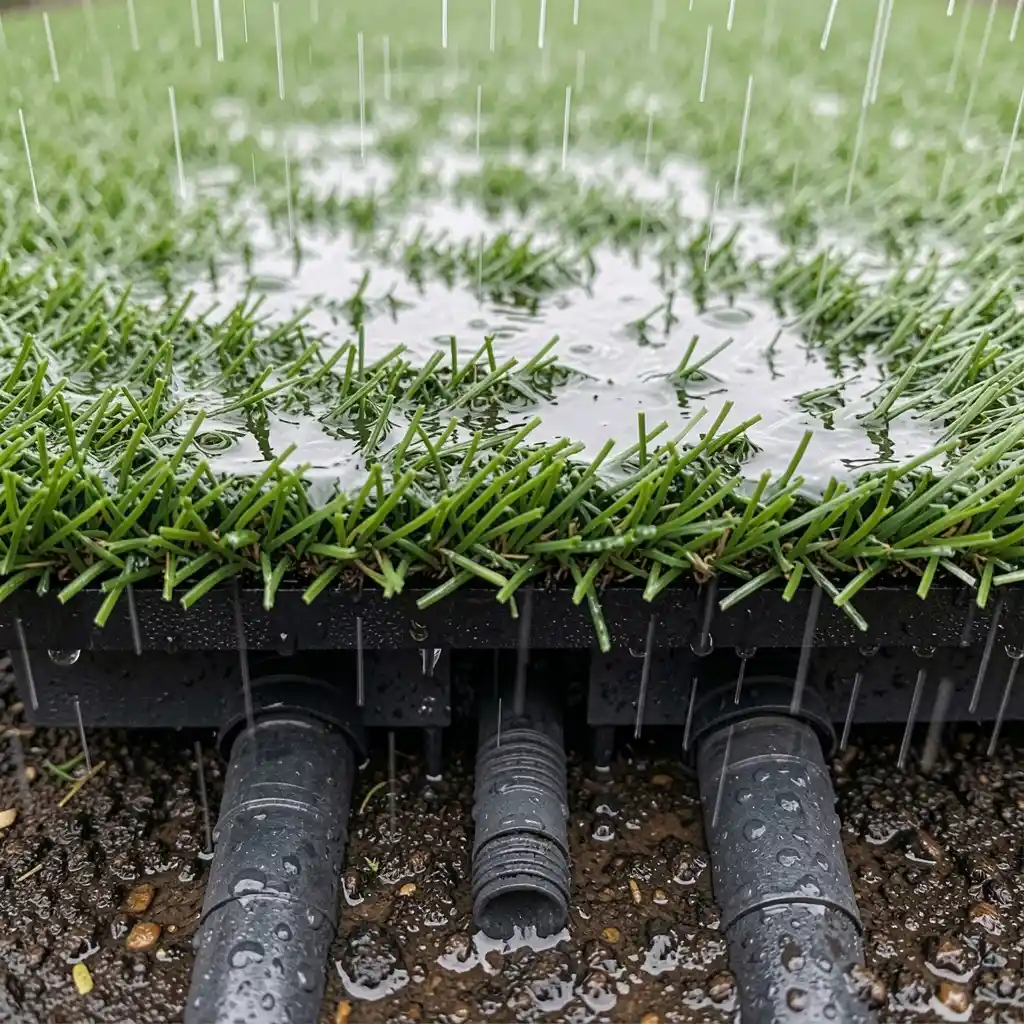
Artificial grass is not a solid sheet of plastic sitting on top of soil. It is a layered system, and every layer plays a role in moving water downward.
The Permeable Backing
Underneath the green fibres sits a backing material. Most modern turf backings use either hole-punched perforations or a fully permeable weave. Both designs let water pass straight through instead of pooling on top. According to SYNLawn, properly installed synthetic turf can actually drain water faster than a natural lawn, since it does not rely on slow soil absorption.
The Sub-Base Layer Beneath the Turf
Below the backing sits the sub-base. This layer usually consists of compacted crushed stone or road base, and it does two jobs at once. First, it keeps the surface stable underfoot. Second, it channels water sideways and downward so nothing collects under the turf. Tusker Civils builds this sub-base the same way it approaches every concrete and hardstanding project in Bulawayo: correct compaction first, finish second.
What Happens to Rainwater on Artificial Grass
So what actually happens the moment rain starts falling?
Water Moves Through, Not Across
Rain hits the blades, runs down through the permeable backing, and enters the sub-base almost immediately. Unlike a natural lawn, there is no soil surface to saturate first. This is why well-installed synthetic turf rarely shows puddles, even during a heavy Bulawayo downpour.
Where the Water Goes After That
Once water reaches the sub-base, gravity and gradient take over. A correctly graded base carries water toward the site’s natural fall, a stormwater channel, or a soakaway. This is the same principle turf industry specialists point to when explaining why fully-permeable backing systems perform so well in high-rainfall regions.
Common Drainage Problems in Bulawayo Gardens
Drainage failures almost never come from the grass itself. They come from what happens underneath it.
Poor Sub-Base Preparation
A thin or poorly compacted sub-base cannot move water fast enough. Rain then backs up and sits beneath the turf, leading to a spongy feel and, eventually, a bad smell.
Compacted or Clay-Heavy Soil
Bulawayo’s clay-rich soil in several suburbs holds water instead of letting it pass through. Without the right sub-base thickness, this soil type turns a lawn into a shallow dam after every storm.
Flat Installations Without a Fall
Even a perfect sub-base fails without a slight gradient. A flat lawn has nowhere to send excess water, so it lingers at the lowest point of the garden instead of draining away.
How Tusker Civils Builds Artificial Grass That Handles Bulawayo Rain
Tusker Civils treats drainage as a civil engineering task first and a landscaping finish second. Every artificial grass installation starts with a site assessment that checks soil type, natural fall, and existing water flow.
From there, the team builds a compacted sub-base with the correct depth for Bulawayo’s rainfall patterns, then grades the surface so water always has somewhere to go. On properties that also need broader water management, Tusker often pairs artificial grass with a properly designed irrigation and drainage system, so the whole garden works as one unit rather than isolated features.
This same water-first thinking carries across the business. Tusker’s waterproofing division in Bulawayo deals with water management every day, and that expertise feeds directly into how the landscaping team plans sub-base drainage. Paved areas next to a lawn also need to shed water correctly, which is why Tusker’s paving installations always tie into the same site drainage plan as the grass.
Signs Your Artificial Grass Has a Drainage Problem
A few warning signs point to a drainage issue rather than normal wear. Standing water more than a few minutes after rain stops is the clearest sign. A musty smell rising from the lawn, especially in warm weather, usually means water sits trapped beneath the surface. A soft, spongy feel underfoot instead of a firm, stable surface also points to a weak or saturated sub-base.
Any of these signs call for a proper inspection rather than a quick fix on the surface, since the real problem sits below the turf.
Get Artificial Grass Built to Handle Bulawayo’s Rainy Season
Rain does not have to mean mud, puddles, or a ruined lawn. With the right sub-base, the correct fall, and quality permeable backing, artificial grass drainage in Bulawayo works quietly in the background through every storm.
Tusker Civils & Landscapes has already built this kind of system across Burnside and the surrounding suburbs. Contact Tusker Civils today for a site assessment and a lawn that stays dry and stable long after the rain stops.
Latest Posts:
Can Artificial Grass Increase Your Property Value in Bulawayo?
Artificial Grass vs Natural Lawns in Bulawayo’s Dry Climate — Which Saves More Water?
Commercial vs Residential Waterproofing in Bulawayo: Key Differences in Materials and Approach